
When a couple comes to me for a fertility consultation, I evaluate both partners from day one. Not because I assume the problem lies with the male partner, but because in approximately 40 to 50% of couples who cannot conceive, a male factor is either the primary cause or a contributing one. Investigating only the woman while assuming the man is fine is one of the most common reasons couples spend months — sometimes years — on treatments that cannot work because the correct diagnosis was never made.
In Uttar Pradesh, this gap is particularly significant. Male infertility carries a social stigma that has no medical basis. Many men avoid testing because of what the result might say about them as a person. It says nothing about who you are. It says something about your sperm — a biological parameter, like blood pressure or cholesterol, that can be measured, understood, and in most cases, addressed.
If you and your partner have been trying to conceive for 12 months or more without success, a semen analysis is the single most important test you can do this week. It is painless, takes 20 minutes, and gives more diagnostic information than almost any other test in fertility medicine.
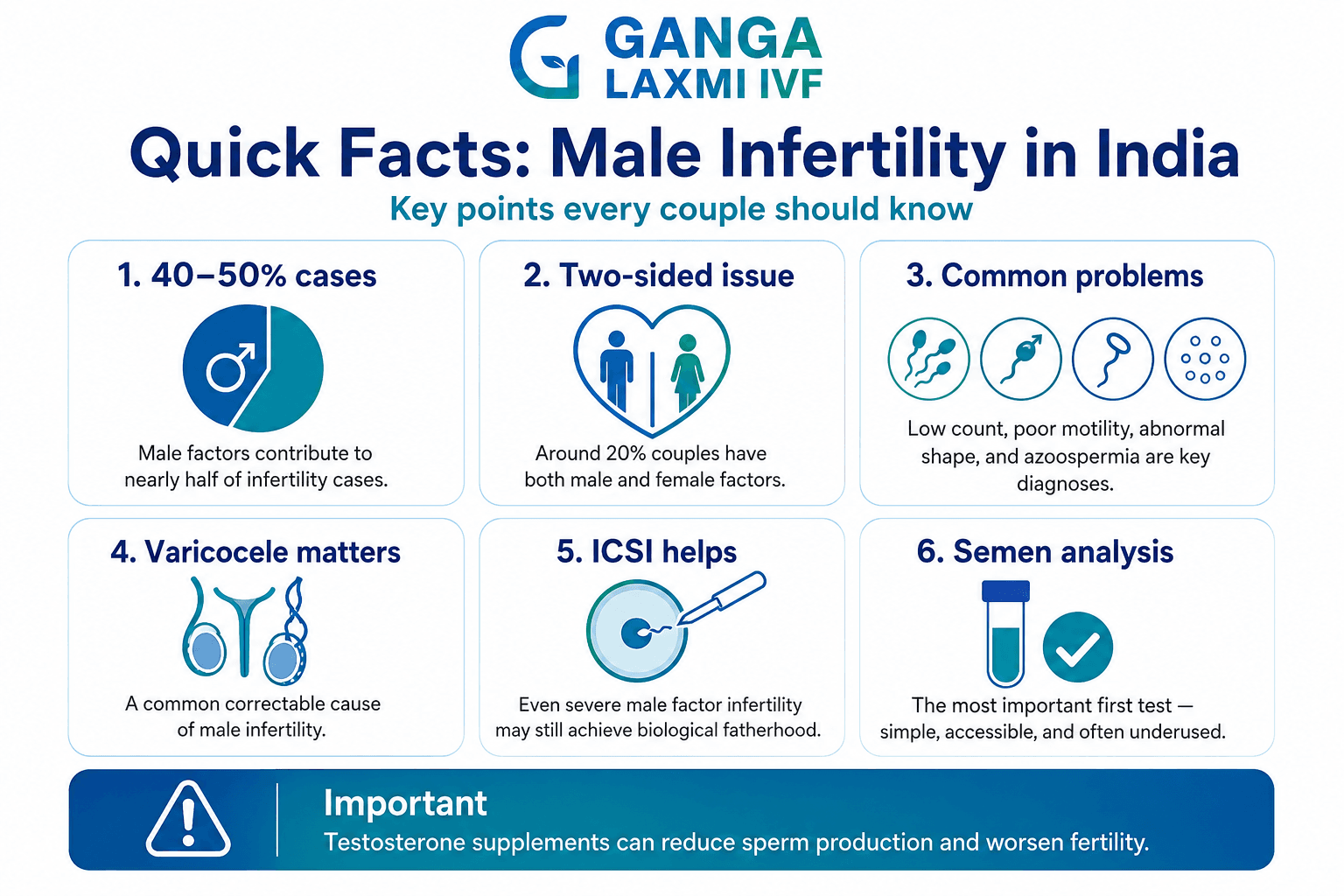
1. Quick Facts: Male Infertility in India
- 1Male factors contribute to 40 to 50% of all infertility cases in India. In approximately 20% of cases, both male and female factors are present simultaneously.
- 2A study of 447 infertile men at an Indian tertiary centre found that 40% had oligospermia, asthenospermia, or teratospermia (low count, poor motility, or abnormal shape), and 40% had azoospermia (no sperm in the ejaculate). (National Medical Journal of India, 2020)
- 3A 2025 study from Dr. Ram Manohar Lohia Institute of Medical Sciences, Lucknow, found that azoospermia was significantly more frequent in men with varicocele (46.7%) compared to those without (20%). (Cureus, 2025)
- 4Varicocele — enlarged veins around the testicle — is the most common surgically correctable cause of male infertility, present in 15% of all men and up to 35 to 40% of infertile men.
- 5ICSI (Intracytoplasmic Sperm Injection) has transformed outcomes for severe male infertility. Even men with very few sperm, or sperm retrieved surgically from the testicle, can father biological children through IVF with ICSI.
- 6Testosterone supplementation does not improve fertility. It often makes it significantly worse by shutting down the body's own sperm production.
- 7The semen analysis remains the most important, most accessible, and most underused test in male fertility evaluation. A normal-appearing, sexually functional man can have severe sperm abnormalities. Assumptions are not a diagnostic tool.
2. What Causes Male Infertility?
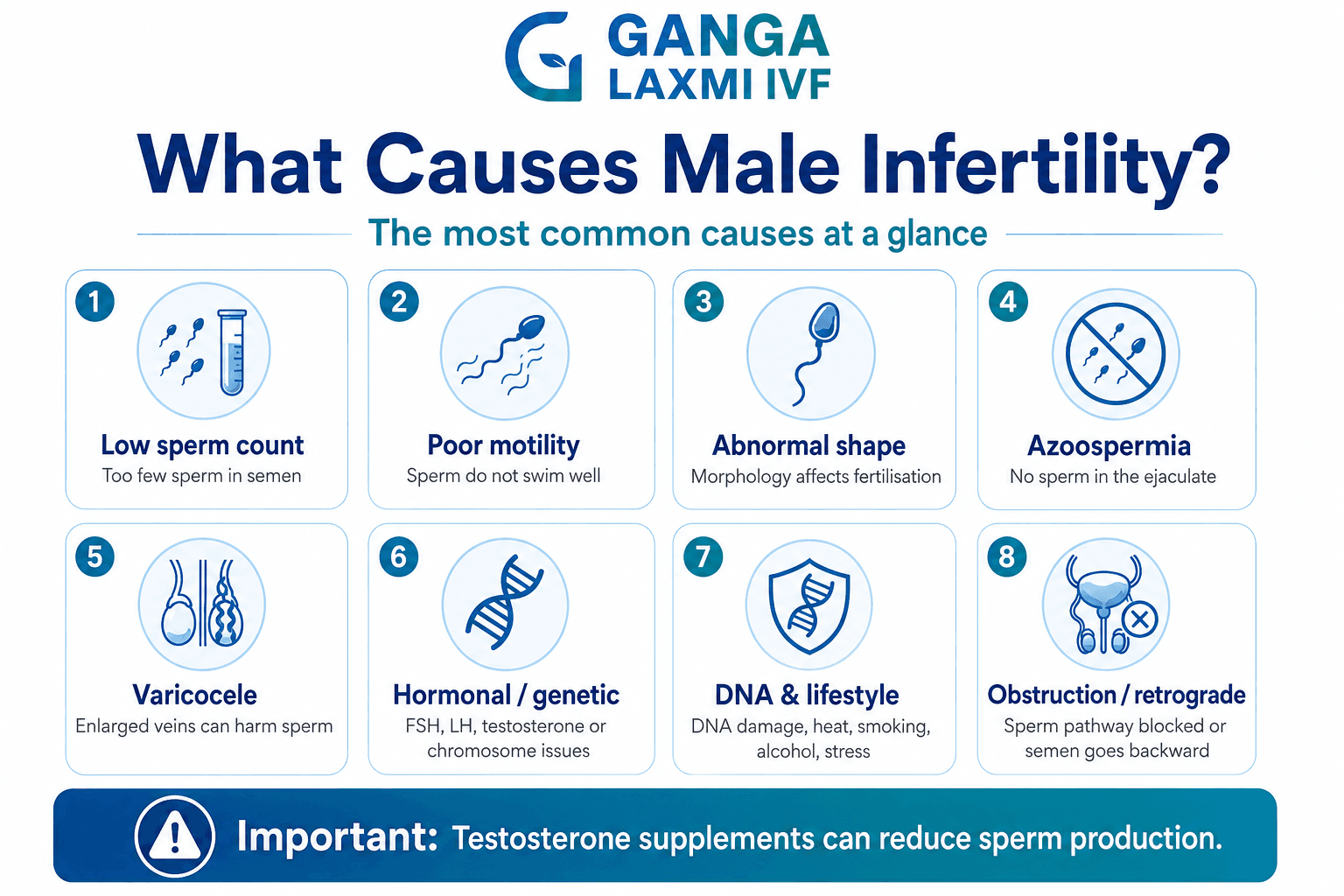
Male infertility is not a single condition. It is a category that covers several distinct diagnoses, each with different causes, different investigations, and different treatment options. Understanding the specific cause is what determines which path to take.
Oligospermia
What It Means
Low sperm count (below 15 million per mL by WHO 2021 reference values)
Clinical Notes
The most common semen abnormality. Mild oligospermia may respond to lifestyle and medication; severe oligospermia often requires ICSI
Asthenospermia
What It Means
Poor sperm motility (below 42% total motility, or below 30% progressive motility)
Clinical Notes
Even with adequate count, non-motile sperm cannot reach or fertilise the egg. A significant independent cause of infertility
Teratospermia
What It Means
Abnormal sperm morphology (below 4% normal forms by Kruger strict criteria)
Clinical Notes
Most men have a mix of normal and abnormal forms. Severe teratospermia combined with poor motility is treated with ICSI
Azoospermia
What It Means
No sperm found in the ejaculate
Clinical Notes
Affects approximately 1% of all men and 10 to 15% of infertile men. Two types: obstructive (blockage) and non-obstructive (production failure). Both types can be treated — see TESA/PESA section below
Varicocele
What It Means
Enlarged varicose veins around the testicle
Clinical Notes
Increases scrotal temperature, damaging sperm production. Surgically correctable. A 2025 study from Dr. RMLIMS Lucknow found varicocele significantly associated with both azoospermia and oligospermia in northern Indian men
Hormonal imbalances
What It Means
Low testosterone, abnormal FSH/LH, elevated prolactin
Clinical Notes
The hormonal cascade from brain to testicle must function correctly for sperm production. Each level can be assessed with a blood test and treated specifically
Genetic causes
What It Means
Klinefelter syndrome (47XXY), Y chromosome microdeletions, chromosomal translocations
Clinical Notes
Found in approximately 2 to 10% of infertile men; higher prevalence in severe oligospermia and azoospermia. Genetic testing before ICSI is important in these patients
Sperm DNA fragmentation
What It Means
Damage to the genetic material inside sperm
Clinical Notes
Normal semen parameters can coexist with high sperm DNA fragmentation. Associated with recurrent miscarriage and poor embryo quality despite adequate fertilisation
Occupational and lifestyle factors
What It Means
Heat exposure, prolonged sitting, tight clothing, pesticide exposure, smoking, alcohol, stress
Clinical Notes
Particularly relevant in UP, where agricultural chemical exposure and heat-intensive occupations are common. These are modifiable and should be addressed before any treatment
Retrograde ejaculation
What It Means
Semen travels backward into the bladder instead of forward during ejaculation
Clinical Notes
Common in men with diabetes, previous pelvic surgery, or taking certain medications. Sperm can be retrieved from urine for IUI or IVF
Obstruction
What It Means
Blockage in the vas deferens, epididymis, or ejaculatory duct
Clinical Notes
May be congenital (born without vas deferens, often associated with cystic fibrosis carrier status) or acquired. Sperm retrieval bypasses the blockage
| Cause | What It Means | Clinical Notes |
|---|---|---|
| Oligospermia | Low sperm count (below 15 million per mL by WHO 2021 reference values) | The most common semen abnormality. Mild oligospermia may respond to lifestyle and medication; severe oligospermia often requires ICSI |
| Asthenospermia | Poor sperm motility (below 42% total motility, or below 30% progressive motility) | Even with adequate count, non-motile sperm cannot reach or fertilise the egg. A significant independent cause of infertility |
| Teratospermia | Abnormal sperm morphology (below 4% normal forms by Kruger strict criteria) | Most men have a mix of normal and abnormal forms. Severe teratospermia combined with poor motility is treated with ICSI |
| Azoospermia | No sperm found in the ejaculate | Affects approximately 1% of all men and 10 to 15% of infertile men. Two types: obstructive (blockage) and non-obstructive (production failure). Both types can be treated — see TESA/PESA section below |
| Varicocele | Enlarged varicose veins around the testicle | Increases scrotal temperature, damaging sperm production. Surgically correctable. A 2025 study from Dr. RMLIMS Lucknow found varicocele significantly associated with both azoospermia and oligospermia in northern Indian men |
| Hormonal imbalances | Low testosterone, abnormal FSH/LH, elevated prolactin | The hormonal cascade from brain to testicle must function correctly for sperm production. Each level can be assessed with a blood test and treated specifically |
| Genetic causes | Klinefelter syndrome (47XXY), Y chromosome microdeletions, chromosomal translocations | Found in approximately 2 to 10% of infertile men; higher prevalence in severe oligospermia and azoospermia. Genetic testing before ICSI is important in these patients |
| Sperm DNA fragmentation | Damage to the genetic material inside sperm | Normal semen parameters can coexist with high sperm DNA fragmentation. Associated with recurrent miscarriage and poor embryo quality despite adequate fertilisation |
| Occupational and lifestyle factors | Heat exposure, prolonged sitting, tight clothing, pesticide exposure, smoking, alcohol, stress | Particularly relevant in UP, where agricultural chemical exposure and heat-intensive occupations are common. These are modifiable and should be addressed before any treatment |
| Retrograde ejaculation | Semen travels backward into the bladder instead of forward during ejaculation | Common in men with diabetes, previous pelvic surgery, or taking certain medications. Sperm can be retrieved from urine for IUI or IVF |
| Obstruction | Blockage in the vas deferens, epididymis, or ejaculatory duct | May be congenital (born without vas deferens, often associated with cystic fibrosis carrier status) or acquired. Sperm retrieval bypasses the blockage |
A note on testosterone replacement and fertility
This is one of the most important warnings I give to male patients. If you are currently taking testosterone injections, gels, or patches — whether prescribed for low testosterone, bodybuilding, or general wellbeing — this may be significantly reducing your sperm count, potentially to zero. External testosterone tells the brain to stop producing LH, which shuts down the testicle's own sperm-making process. This effect is often reversible, but recovery can take 6 to 18 months after stopping. If you are trying to conceive and are on testosterone, please tell your fertility doctor immediately.
3. Signs That May Indicate Male Infertility
Most men with low sperm count or azoospermia have no symptoms at all. This is the single most important point in this entire article. A man who is sexually functional, has a normal libido, ejaculates normally, and has no pain or swelling can still have a semen analysis that shows severe abnormalities. The body does not signal sperm problems the way it signals a broken bone.
That said, certain signs warrant earlier evaluation rather than waiting for 12 months:
Inability to conceive after 12 months of regular, unprotected intercourse
What It May Indicate
Could be male factor, female factor, or combined — requires evaluation of both partners
When to Act
Start evaluation at 12 months (or 6 months if either partner is over 35)
Low libido or reduced sexual desire
What It May Indicate
May indicate low testosterone, elevated prolactin, thyroid disorder, or psychological stress
When to Act
Seek evaluation if persistent for more than a few weeks
Erectile dysfunction
What It May Indicate
Can be hormonal (low testosterone, high prolactin), vascular, neurological, or psychological
When to Act
Evaluation warranted — also important because it may independently limit conception if intercourse is not completing normally
Pain, swelling, or a lump in the testicle
What It May Indicate
Varicocele (painless swelling), epididymal cyst, infection, or testicular tumour
When to Act
Any persistent lump or swelling should be evaluated urgently
History of undescended testicle (cryptorchidism)
What It May Indicate
Significantly associated with reduced sperm production and increased testicular cancer risk
When to Act
Semen analysis before trying to conceive, regardless of whether the condition was surgically corrected in childhood
History of mumps as an adult
What It May Indicate
Post-pubertal mumps orchitis can cause permanent testicular damage and azoospermia
When to Act
Semen analysis if history is present
Prior infection — STI, epididymitis, or orchitis
What It May Indicate
Chlamydia and gonorrhea can cause obstructive azoospermia through scarring of the epididymis or vas deferens
When to Act
Semen analysis if history of significant pelvic or genital infection
Previous surgery in the groin, scrotum, or pelvis
What It May Indicate
Hernia repair, vasectomy, orchidopexy, or other pelvic surgery can affect the vas deferens
When to Act
Semen analysis before assuming fertility is unaffected
Occupational or chemical exposures
What It May Indicate
Pesticides, heavy metals, prolonged heat exposure (e.g. furnace work, long-distance driving)
When to Act
Semen analysis and lifestyle assessment
| Sign | What It May Indicate | When to Act |
|---|---|---|
| Inability to conceive after 12 months of regular, unprotected intercourse | Could be male factor, female factor, or combined — requires evaluation of both partners | Start evaluation at 12 months (or 6 months if either partner is over 35) |
| Low libido or reduced sexual desire | May indicate low testosterone, elevated prolactin, thyroid disorder, or psychological stress | Seek evaluation if persistent for more than a few weeks |
| Erectile dysfunction | Can be hormonal (low testosterone, high prolactin), vascular, neurological, or psychological | Evaluation warranted — also important because it may independently limit conception if intercourse is not completing normally |
| Pain, swelling, or a lump in the testicle | Varicocele (painless swelling), epididymal cyst, infection, or testicular tumour | Any persistent lump or swelling should be evaluated urgently |
| History of undescended testicle (cryptorchidism) | Significantly associated with reduced sperm production and increased testicular cancer risk | Semen analysis before trying to conceive, regardless of whether the condition was surgically corrected in childhood |
| History of mumps as an adult | Post-pubertal mumps orchitis can cause permanent testicular damage and azoospermia | Semen analysis if history is present |
| Prior infection — STI, epididymitis, or orchitis | Chlamydia and gonorrhea can cause obstructive azoospermia through scarring of the epididymis or vas deferens | Semen analysis if history of significant pelvic or genital infection |
| Previous surgery in the groin, scrotum, or pelvis | Hernia repair, vasectomy, orchidopexy, or other pelvic surgery can affect the vas deferens | Semen analysis before assuming fertility is unaffected |
| Occupational or chemical exposures | Pesticides, heavy metals, prolonged heat exposure (e.g. furnace work, long-distance driving) | Semen analysis and lifestyle assessment |
4. When Should You See a Male Infertility Specialist?
The single most important thing you can do right now: book a semen analysis. It takes 20 minutes, costs a fraction of any other fertility test, and tells you more about your reproductive health than any other investigation. If the result is normal, you have ruled out one half of the equation. If it is not normal, you have a diagnosis — and a diagnosis is where treatment begins.
5. Male Fertility Tests at Ganga Laxmi IVF
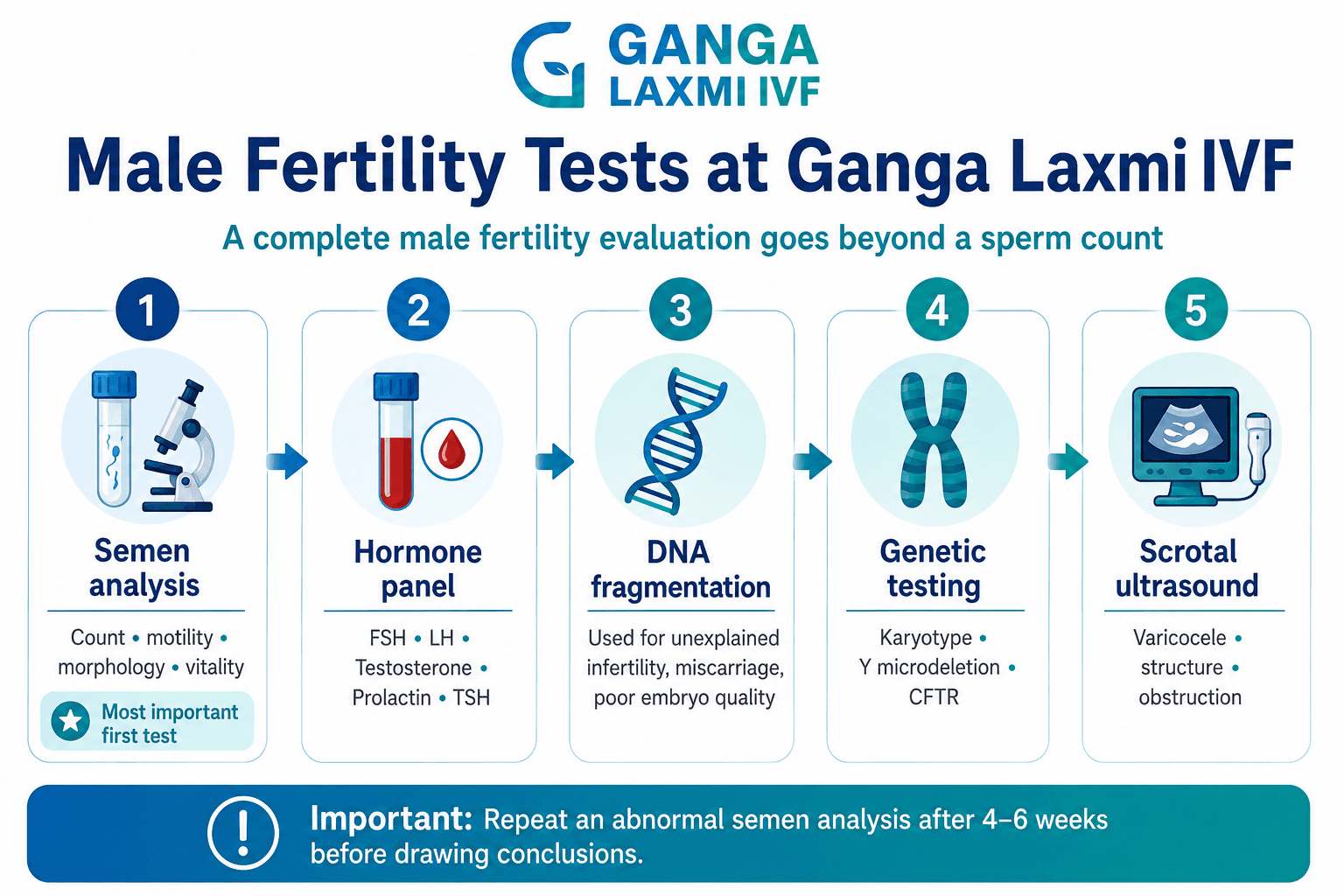
When I see a couple for a first consultation, a semen analysis for the male partner is part of the standard workup — not an afterthought. Here is what a complete male fertility evaluation includes at Ganga Laxmi IVF:
Step 1: Semen Analysis (The Most Important Test)
The semen analysis is simple, non-invasive, and provides more clinical information per rupee than almost any other fertility test. It is produced by abstaining from ejaculation for 2 to 5 days and providing a sample, which is analysed in the laboratory within one hour.
Semen volume
WHO 2021 Reference Value
1.4 mL or above
What Abnormality Suggests
Low volume may suggest retrograde ejaculation, obstruction of ejaculatory ducts, or absent seminal vesicles
Sperm concentration
WHO 2021 Reference Value
16 million per mL or above
What Abnormality Suggests
Below this indicates oligospermia; zero indicates azoospermia
Total sperm count
WHO 2021 Reference Value
39 million per ejaculate or above
What Abnormality Suggests
Total count is more clinically relevant than concentration alone
Total motility
WHO 2021 Reference Value
42% or above
What Abnormality Suggests
Below this indicates asthenospermia
Progressive motility
WHO 2021 Reference Value
30% or above
What Abnormality Suggests
Sperm that swim in a forward direction — the sperm that can actually reach the egg
Morphology (normal forms)
WHO 2021 Reference Value
4% or above (Kruger strict criteria)
What Abnormality Suggests
Below 4% is teratospermia — associated with reduced fertilisation rates in standard IVF, treated with ICSI
Sperm vitality (live sperm)
WHO 2021 Reference Value
54% or above
What Abnormality Suggests
Low vitality with normal motility suggests immature sperm or environmental stress
| Parameter | WHO 2021 Reference Value | What Abnormality Suggests |
|---|---|---|
| Semen volume | 1.4 mL or above | Low volume may suggest retrograde ejaculation, obstruction of ejaculatory ducts, or absent seminal vesicles |
| Sperm concentration | 16 million per mL or above | Below this indicates oligospermia; zero indicates azoospermia |
| Total sperm count | 39 million per ejaculate or above | Total count is more clinically relevant than concentration alone |
| Total motility | 42% or above | Below this indicates asthenospermia |
| Progressive motility | 30% or above | Sperm that swim in a forward direction — the sperm that can actually reach the egg |
| Morphology (normal forms) | 4% or above (Kruger strict criteria) | Below 4% is teratospermia — associated with reduced fertilisation rates in standard IVF, treated with ICSI |
| Sperm vitality (live sperm) | 54% or above | Low vitality with normal motility suggests immature sperm or environmental stress |
A single abnormal result is not a diagnosis. I request a repeat semen analysis 4 to 6 weeks after any initial abnormal result before drawing conclusions, because sperm parameters can fluctuate with illness, fever, stress, and lifestyle in the preceding 3 months.
Step 2: Hormonal Assessment
FSH (Follicle Stimulating Hormone)
Why It Is Tested
Stimulates sperm production in the testicles
What Abnormalities Mean
Elevated FSH suggests testicular failure (non-obstructive problem); low FSH suggests a brain-pituitary hormonal problem
LH (Luteinising Hormone)
Why It Is Tested
Stimulates testosterone production in the testicles
What Abnormalities Mean
Evaluated alongside FSH to distinguish between primary testicular failure and hypothalamic-pituitary disorders
Total testosterone
Why It Is Tested
The main male sex hormone; required for sperm production at very high concentrations inside the testicle
What Abnormalities Mean
Low testosterone reduces libido, sexual function, and sperm production
Prolactin
Why It Is Tested
Elevated prolactin suppresses FSH and LH, reducing sperm production
What Abnormalities Mean
Elevated levels may indicate a prolactin-secreting pituitary tumour (prolactinoma) — treatable with medication
TSH (Thyroid function)
Why It Is Tested
Thyroid disorders in men affect sperm quality and sexual function
What Abnormalities Mean
Often overlooked in male fertility evaluation; I include it routinely
Oestradiol
Why It Is Tested
Elevated oestrogen in men suppresses testosterone production
What Abnormalities Mean
Relevant in overweight men with gynaecomastia or unexplained low testosterone
| Hormone | Why It Is Tested | What Abnormalities Mean |
|---|---|---|
| FSH (Follicle Stimulating Hormone) | Stimulates sperm production in the testicles | Elevated FSH suggests testicular failure (non-obstructive problem); low FSH suggests a brain-pituitary hormonal problem |
| LH (Luteinising Hormone) | Stimulates testosterone production in the testicles | Evaluated alongside FSH to distinguish between primary testicular failure and hypothalamic-pituitary disorders |
| Total testosterone | The main male sex hormone; required for sperm production at very high concentrations inside the testicle | Low testosterone reduces libido, sexual function, and sperm production |
| Prolactin | Elevated prolactin suppresses FSH and LH, reducing sperm production | Elevated levels may indicate a prolactin-secreting pituitary tumour (prolactinoma) — treatable with medication |
| TSH (Thyroid function) | Thyroid disorders in men affect sperm quality and sexual function | Often overlooked in male fertility evaluation; I include it routinely |
| Oestradiol | Elevated oestrogen in men suppresses testosterone production | Relevant in overweight men with gynaecomastia or unexplained low testosterone |
Step 3: Sperm DNA Fragmentation Testing
Sperm DNA fragmentation is not part of a routine semen analysis but I recommend it in specific situations: unexplained infertility with a normal semen analysis, recurrent miscarriage, poor embryo quality despite adequate fertilisation, and before planning ICSI cycles. The test measures the percentage of sperm with fragmented or damaged DNA. High fragmentation predicts poor embryo development even when the sperm look normal on standard analysis.
Step 4: Genetic Testing
For men with severe oligospermia (below 5 million per mL) or azoospermia, I recommend:
- Karyotype (chromosomal analysis): To identify Klinefelter syndrome (47XXY) or other chromosomal abnormalities
- Y chromosome microdeletion analysis: Deletions in specific regions of the Y chromosome are found in 5 to 10% of azoospermic men and predict whether surgical sperm retrieval is likely to succeed
- CFTR gene testing: For men with congenital absence of the vas deferens, which is strongly associated with cystic fibrosis carrier status
Step 5: Scrotal Ultrasound
Not required for every patient, but essential in specific situations:
- To confirm or grade varicocele when clinical examination is inconclusive
- To evaluate testicular volume and detect any mass or structural abnormality
- In azoospermia, to assess whether the epididymis and vas deferens are present and patent
- To look for ejaculatory duct obstruction using transrectal ultrasound when semen volume is very low
6. Approximate Cost of Male Fertility Tests in Lucknow
One of the most common questions I receive before a first consultation is about cost. The following are approximate ranges for male fertility investigations in Lucknow. Actual costs at Ganga Laxmi IVF are confirmed at consultation and may vary based on your specific clinical requirements.
Initial consultation
Approximate Cost Range (Lucknow)
₹400
Notes
Includes review of history, existing reports, and investigation plan
Semen analysis
Approximate Cost Range (Lucknow)
₹500 to ₹1,500
Notes
WHO 2021 standard parameters; repeat testing recommended if initial result is abnormal
Hormonal profile
Approximate Cost Range (Lucknow)
₹1,500 to ₹3,500
Notes
FSH, LH, Testosterone, Prolactin, TSH. Single blood draw; morning collection preferred
Sperm DNA fragmentation
Approximate Cost Range (Lucknow)
₹3,000 to ₹6,000
Notes
Recommended in unexplained infertility, recurrent miscarriage, poor IVF embryo quality
Scrotal Doppler ultrasound
Approximate Cost Range (Lucknow)
₹800 to ₹2,000
Notes
Varicocele grading and testicular assessment
Karyotype (chromosomal analysis)
Approximate Cost Range (Lucknow)
₹3,000 to ₹5,000
Notes
For severe oligospermia or azoospermia
Y chromosome microdeletion
Approximate Cost Range (Lucknow)
₹4,000 to ₹7,000
Notes
Before micro-TESE planning in non-obstructive azoospermia
PESA / TESA (sperm retrieval)
Approximate Cost Range (Lucknow)
₹15,000 to ₹40,000
Notes
Includes retrieval procedure; combined with ICSI cycle
ICSI with IVF
Approximate Cost Range (Lucknow)
₹1,20,000 to ₹1,80,000
Notes
Complete cycle including stimulation, retrieval, ICSI, and transfer
| Test | Approximate Cost Range (Lucknow) | Notes |
|---|---|---|
| Initial consultation | ₹400 | Includes review of history, existing reports, and investigation plan |
| Semen analysis | ₹500 to ₹1,500 | WHO 2021 standard parameters; repeat testing recommended if initial result is abnormal |
| Hormonal profile | ₹1,500 to ₹3,500 | FSH, LH, Testosterone, Prolactin, TSH. Single blood draw; morning collection preferred |
| Sperm DNA fragmentation | ₹3,000 to ₹6,000 | Recommended in unexplained infertility, recurrent miscarriage, poor IVF embryo quality |
| Scrotal Doppler ultrasound | ₹800 to ₹2,000 | Varicocele grading and testicular assessment |
| Karyotype (chromosomal analysis) | ₹3,000 to ₹5,000 | For severe oligospermia or azoospermia |
| Y chromosome microdeletion | ₹4,000 to ₹7,000 | Before micro-TESE planning in non-obstructive azoospermia |
| PESA / TESA (sperm retrieval) | ₹15,000 to ₹40,000 | Includes retrieval procedure; combined with ICSI cycle |
| ICSI with IVF | ₹1,20,000 to ₹1,80,000 | Complete cycle including stimulation, retrieval, ICSI, and transfer |
Patients travelling from Kanpur, Barabanki, Sitapur, Rae Bareli, and Ayodhya often find that the clinical depth of evaluation at Ganga Laxmi IVF — which typically identifies a specific, actionable cause where previous evaluations have not — represents better value than multiple inconclusive investigations at closer facilities.
7. Treatment Options for Male Infertility
The treatment for male infertility depends entirely on the underlying cause. There is no single protocol. Here is how I approach the most common diagnoses:
Lifestyle Optimisation — Always the First Step
Before any medication or procedure, lifestyle factors should be optimised. For some men — particularly those with mild oligospermia or poor motility — lifestyle changes alone produce meaningful improvement within 3 to 6 months (the time it takes for a new cohort of sperm to complete development).
- Stop smoking: Smoking reduces sperm count, motility, and DNA integrity.
- Reduce or eliminate alcohol: Heavy alcohol use suppresses testosterone and sperm production.
- Avoid heat exposure: Scrotal temperature should be slightly below body temperature. Prolonged sitting, tight underwear, and occupational heat exposure all reduce sperm quality.
- Diet & Weight: A diet rich in antioxidants supports sperm health. Excess body fat converts testosterone to oestrogen.
- Avoid anabolic steroids: Even over-the-counter testosterone boosters can suppress sperm production.
Medical Treatment
Hypogonadotropic hypogonadism
Treatment
Clomiphene citrate or hCG injections
How It Works
Stimulates the pituitary to produce more FSH and LH, which drives the testicles to produce more testosterone and sperm.
Elevated prolactin
Treatment
Cabergoline or bromocriptine
How It Works
Dopamine agonists that lower prolactin levels and restore FSH/LH function
Retrograde ejaculation
Treatment
Pseudoephedrine (sympathomimetic)
How It Works
Tightens the bladder neck during ejaculation, directing semen forward. Not effective in all cases
Infection-related sperm damage
Treatment
Appropriate antibiotics
How It Works
Treats active infection; does not reverse scarring from past infections
| Condition | Treatment | How It Works |
|---|---|---|
| Hypogonadotropic hypogonadism | Clomiphene citrate or hCG injections | Stimulates the pituitary to produce more FSH and LH, which drives the testicles to produce more testosterone and sperm. |
| Elevated prolactin | Cabergoline or bromocriptine | Dopamine agonists that lower prolactin levels and restore FSH/LH function |
| Retrograde ejaculation | Pseudoephedrine (sympathomimetic) | Tightens the bladder neck during ejaculation, directing semen forward. Not effective in all cases |
| Infection-related sperm damage | Appropriate antibiotics | Treats active infection; does not reverse scarring from past infections |
Surgical Treatment
Varicocele
Procedure
Microsurgical varicocelectomy or laparoscopic varicocelectomy
Outcomes
Improves sperm parameters in approximately 60 to 70% of men with clinical varicocele.
Obstructive azoospermia (postvasectomy)
Procedure
Vasectomy reversal (vasovasostomy)
Outcomes
Success depends on time since vasectomy; best results within 10 years
Ejaculatory duct obstruction
Procedure
Transurethral resection of ejaculatory ducts (TURED)
Outcomes
Removes the obstructing tissue to restore sperm flow
| Condition | Procedure | Outcomes |
|---|---|---|
| Varicocele | Microsurgical varicocelectomy or laparoscopic varicocelectomy | Improves sperm parameters in approximately 60 to 70% of men with clinical varicocele. |
| Obstructive azoospermia (postvasectomy) | Vasectomy reversal (vasovasostomy) | Success depends on time since vasectomy; best results within 10 years |
| Ejaculatory duct obstruction | Transurethral resection of ejaculatory ducts (TURED) | Removes the obstructing tissue to restore sperm flow |
IUI (Intrauterine Insemination)
IUI is appropriate when sperm count and motility are mildly to moderately reduced, the female partner's tubes are open, and the total motile sperm count after preparation is at least 5 to 10 million. Sperm are washed and concentrated in the laboratory and placed directly into the uterine cavity, bypassing the cervix and reducing the distance sperm must travel.
IUI has clear limitations in severe male factor infertility. If the total motile sperm count is very low, or morphology is severely abnormal, IUI success rates are too low to justify the time investment. In these cases, moving to ICSI is the correct clinical decision.
8. IUI vs IVF vs ICSI: Which Is Right for Your Situation?
Patients frequently ask how to choose between these three treatments. The answer is determined by the semen analysis result, not by preference or cost. This table is a quick reference — the final recommendation always comes from a full clinical evaluation.
Mild low sperm count (10 to 15 million/mL, good motility)
IUI
Appropriate
IVF (standard)
Appropriate
IVF with ICSI
Appropriate
Moderate low count (5 to 10 million/mL)
IUI
Possible, with caution
IVF (standard)
Preferred
IVF with ICSI
Preferred
Severe low count (below 5 million/mL)
IUI
Not recommended
IVF (standard)
Limited benefit
IVF with ICSI
Treatment of choice
Poor motility (asthenospermia)
IUI
Possible if total motile count is adequate
IVF (standard)
Possible
IVF with ICSI
Preferred
Abnormal morphology (teratospermia, below 4%)
IUI
Low success
IVF (standard)
Low fertilisation rate
IVF with ICSI
Treatment of choice
Azoospermia (no sperm in ejaculate)
IUI
Not possible
IVF (standard)
Not possible
IVF with ICSI
With TESA/PESA retrieval
High sperm DNA fragmentation
IUI
Not recommended
IVF (standard)
May worsen outcome
IVF with ICSI
With IMSI (advanced sperm selection)
Surgically retrieved sperm
IUI
Not possible
IVF (standard)
Cannot fertilise without assistance
IVF with ICSI
Only option
Unexplained infertility (normal SA, normal female)
IUI
Reasonable first step
IVF (standard)
If IUI fails
IVF with ICSI
If standard IVF fertilisation is poor
Recurrent IVF failure (poor fertilisation)
IUI
Not appropriate
IVF (standard)
Repeat without change
IVF with ICSI
Switch to ICSI
| Factor | IUI | IVF (standard) | IVF with ICSI |
|---|---|---|---|
| Mild low sperm count (10 to 15 million/mL, good motility) | Appropriate | Appropriate | Appropriate |
| Moderate low count (5 to 10 million/mL) | Possible, with caution | Preferred | Preferred |
| Severe low count (below 5 million/mL) | Not recommended | Limited benefit | Treatment of choice |
| Poor motility (asthenospermia) | Possible if total motile count is adequate | Possible | Preferred |
| Abnormal morphology (teratospermia, below 4%) | Low success | Low fertilisation rate | Treatment of choice |
| Azoospermia (no sperm in ejaculate) | Not possible | Not possible | With TESA/PESA retrieval |
| High sperm DNA fragmentation | Not recommended | May worsen outcome | With IMSI (advanced sperm selection) |
| Surgically retrieved sperm | Not possible | Cannot fertilise without assistance | Only option |
| Unexplained infertility (normal SA, normal female) | Reasonable first step | If IUI fails | If standard IVF fertilisation is poor |
| Recurrent IVF failure (poor fertilisation) | Not appropriate | Repeat without change | Switch to ICSI |
How to read this table: If your semen analysis shows any of the severe parameters, IUI is unlikely to achieve pregnancy regardless of how many cycles are attempted. Escalating to ICSI earlier is not a more expensive shortcut — it is the clinically appropriate path based on your diagnosis.
9. ICSI: The Game-Changer for Severe Male Factor
ICSI (Intracytoplasmic Sperm Injection) is the single most transformative development in male infertility treatment since the introduction of IVF itself. Before ICSI was developed in 1992, men with severely low sperm counts or surgically retrieved sperm had no path to biological fatherhood. ICSI changed that completely.
The procedure: a single sperm is identified under a high-powered microscope, drawn into a fine glass needle, and injected directly into a mature egg. The sperm does not need to penetrate the egg on its own. It does not need to swim. It needs to exist.
- Severe oligospermia (below 5 million per mL)
- Poor motility (asthenospermia) where the total motile count is very low
- Severe teratospermia
- Azoospermia with surgically retrieved sperm (TESA or PESA)
- High sperm DNA fragmentation
- Previous failed or low fertilisation in standard IVF
- Advanced maternal age IVF where every egg matters
What ICSI achieves: Fertilisation rates with ICSI are approximately 70 to 85% of mature eggs, regardless of whether the sperm came from the ejaculate or a surgical retrieval. This makes it the treatment of choice for any situation where sperm number, motility, or quality is severely compromised. At Ganga Laxmi IVF, ICSI is performed by our trained embryology team using micromanipulation equipment. I discuss whether ICSI is appropriate at the consultation stage, before any cycle begins.
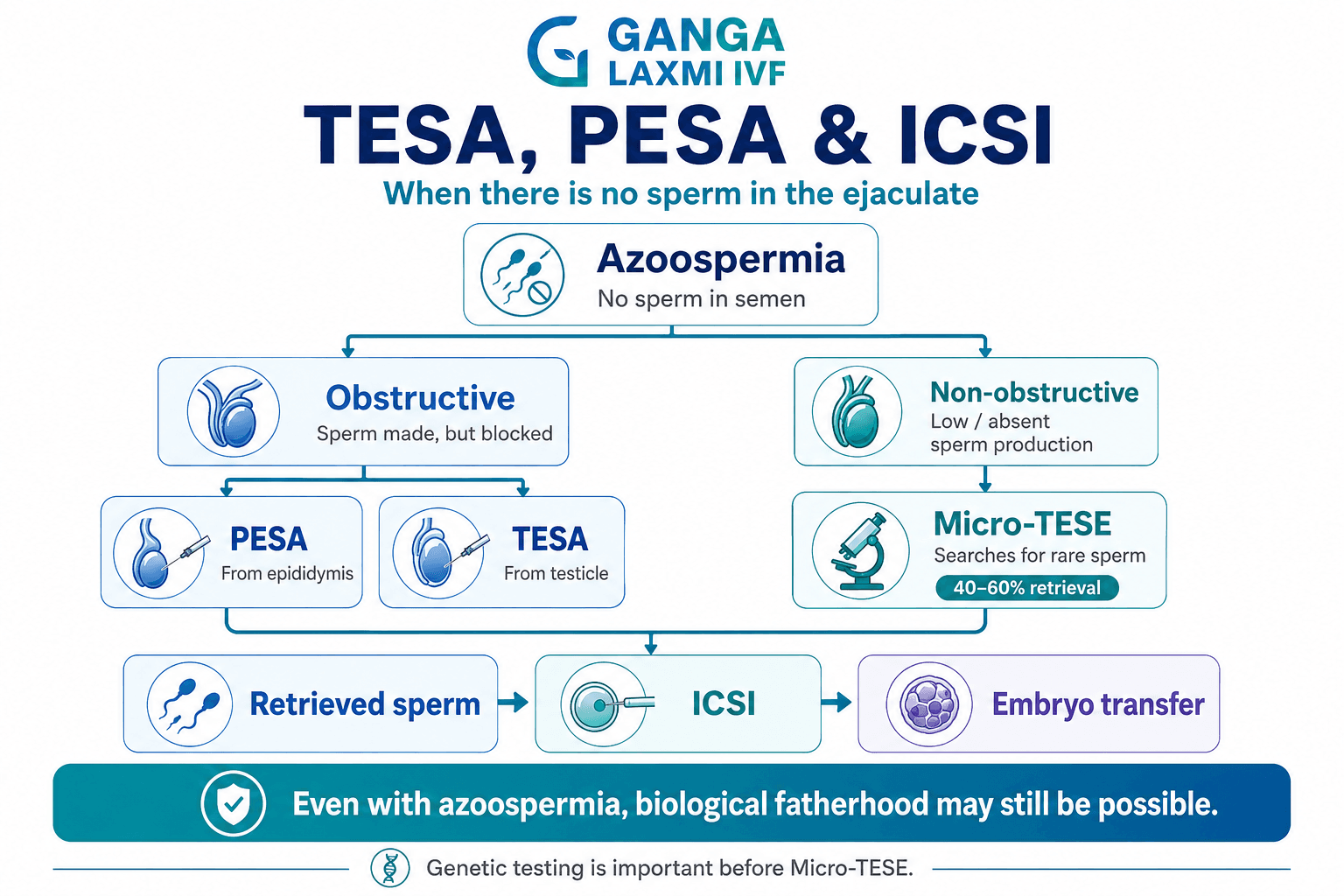
10. TESA and PESA: When There Is No Sperm in the Ejaculate
Azoospermia — the complete absence of sperm in the ejaculate — is diagnosed in approximately 40% of infertile men evaluated in Indian tertiary centres. Many of these men can still father biological children.
Obstructive Azoospermia
Sperm are produced normally in the testicle but cannot reach the ejaculate because of a blockage. Causes include prior vasectomy, prior infection (chlamydia, gonorrhoea), or congenital absence of the vas deferens. The testicles are functioning — sperm just cannot exit.
- PESA (Percutaneous Epididymal Sperm Aspiration): A fine needle is passed through the skin of the scrotum into the epididymis (the coiled tube behind the testicle where sperm mature and are stored). Sperm are aspirated directly. The procedure takes approximately 15 to 20 minutes under local anaesthesia. The retrieved sperm are used for ICSI.
- TESA (Testicular Sperm Aspiration): Where epididymal sperm are not available or insufficient, a needle biopsy of the testicular tissue itself retrieves immature sperm directly from the seminiferous tubules. These sperm can be used for ICSI.
Non-Obstructive Azoospermia
Sperm production is severely reduced or absent. The testicle itself is the problem. Causes include Klinefelter syndrome, Y chromosome microdeletions, prior chemotherapy or radiation, mumps orchitis, and idiopathic (no identifiable cause).
- Micro-TESE (Microsurgical Testicular Sperm Extraction): A more advanced procedure where the testicle is opened under an operating microscope and the embryologist searches for small pockets of active sperm production that may exist even when routine sperm production has failed. Sperm retrieval rates in experienced hands are 40 to 60% in men with non-obstructive azoospermia. Genetic testing beforehand is essential to predict the likelihood of finding sperm and to counsel about potential genetic risks to offspring.
11. Why Men from Lucknow and UP Choose Ganga Laxmi IVF
Male infertility evaluation at the depth described in this article — sperm DNA fragmentation testing, genetic workup before TESA, micro-TESE for non-obstructive azoospermia, combined partner evaluation at the same appointment — is not available at all fertility clinics in Uttar Pradesh. Many clinics perform a basic semen analysis and, if it is abnormal, refer directly to IVF without investigating the cause further. This means patients often go through expensive treatment cycles without ever understanding why previous ones failed.
Men from across Lucknow, including Gomti Nagar, Indira Nagar, Aliganj, Hazratganj, Jankipuram, and along Faizabad Road and Sitapur Road, come to Ganga Laxmi IVF specifically because the evaluation is complete and the treatment recommendation is matched to the finding — not to a standard protocol. Patients also travel regularly from Kanpur, Barabanki, Sitapur, Rae Bareli, and Ayodhya, where access to sperm DNA fragmentation testing, Y chromosome microdeletion analysis, and ICSI with surgically retrieved sperm in the same clinical setting is limited.
What I offer for male factor infertility specifically:
- Semen analysis interpreted alongside the female partner's evaluation, in the same consultation
- Sperm DNA fragmentation testing when clinically indicated — not as a routine add-on but based on the specific history
- Genetic testing before TESA or micro-TESE, so retrieval decisions are informed
- ICSI performed by a trained embryology team with micromanipulation experience
- Honest explanation of what each result means and what the next step should be — including when the answer is that treatment is not yet needed
12. A Note on Privacy and Stigma
In Uttar Pradesh, and across much of India, male infertility carries a stigma that has no relationship to its medical reality. Many men delay or refuse investigation because they conflate sperm count with sexual capacity, masculinity, or personal worth. These are entirely separate things.
A man with azoospermia can have completely normal sexual function, normal testosterone levels, and normal libido. A man with normal sexual function and a normal-looking semen sample can have high sperm DNA fragmentation that is quietly contributing to recurrent miscarriage in his partner. Neither scenario has anything to do with what kind of man, partner, or father he is.
I treat every couple's information with strict confidentiality. Semen analysis results, genetic findings, and surgical procedures are never shared without your explicit consent. Consultations at Ganga Laxmi IVF are private. No one in your waiting room knows why you are there.
Help centre
13. Frequently Asked Questions
These are the questions I am asked most often by men and couples considering male infertility treatments.
Not in most cases. The correct answer depends entirely on the cause. Hormonal causes (low FSH, LH, or hypogonadotropic hypogonadism) are highly treatable with medication that stimulates the body's own sperm production. Varicocele is surgically correctable and improves sperm parameters in 60 to 70% of men. Obstructive azoospermia can be bypassed with PESA or TESA. Even non-obstructive azoospermia, which has no surgical correction, can be addressed through micro-TESE sperm retrieval combined with ICSI in 40 to 60% of cases. The genuinely irreversible scenarios — severe non-obstructive azoospermia with no sperm found on micro-TESE, or genetic conditions where no sperm production is possible — represent a smaller proportion of cases. For these patients, donor sperm IVF or adoption are the paths forward. But reaching that conclusion requires a complete evaluation first, not an assumption.
Yes, meaningfully, for men with mild-to-moderate abnormalities whose underlying cause is lifestyle-related. Sperm take approximately 72 to 90 days to develop — a process called spermatogenesis. This means lifestyle changes need to be sustained for at least 3 months before a repeat semen analysis will reflect their impact. Stopping smoking, reducing alcohol, addressing weight, eliminating heat exposure, managing chronic stress, and correcting Vitamin D deficiency (common across UP) can all improve sperm parameters. Supplements with some evidence behind them for male fertility include CoQ10 (400 to 600 mg daily), zinc, selenium, Vitamin E, folate, and omega-3 fatty acids. Their effect is additive to, not a substitute for, lifestyle change. I discuss supplement recommendations individually based on investigation findings.
Yes, though less abruptly than female fertility. After 40, men experience gradually declining semen volume, lower sperm motility, and increasing sperm DNA fragmentation. Time to achieve pregnancy in a partner lengthens, and miscarriage rates in the partner rise. Research has also identified modest associations between advanced paternal age (particularly above 45 to 50) and increased rates of de novo genetic mutations in offspring, including associations with autism spectrum disorders and schizophrenia at a population level. These should not cause disproportionate alarm for individual patients, but they are worth discussing. If you are over 40 and trying to conceive, I include sperm DNA fragmentation testing alongside the standard semen analysis.
Not painful in any way. The sample is produced in a private, comfortable room at the clinic after 2 to 5 days of abstinence. The process takes approximately 20 minutes from arrival to completion. Results are available within a few hours. I appreciate that some men find the process awkward initially. This is entirely normal and anticipated. Our team handles every aspect with complete professionalism and discretion. Nothing is shared outside the consultation room. If producing a sample at the clinic is genuinely not possible in specific circumstances, discuss this with our team at the time of booking.
No. All consultations, investigations, and treatment details at Ganga Laxmi IVF are treated with strict patient confidentiality. Your semen analysis results, hormonal findings, genetic tests, and treatment plans are not shared with anyone without explicit written consent — not family members, not your employer, not your insurer. Fertility treatment in UP carries specific social sensitivities, and we treat discretion as a clinical obligation, not an optional courtesy.
Yes. Previous paternity does not guarantee current fertility. Sperm parameters can change significantly due to a varicocele that was not present before, prior infections (particularly STIs), hormonal changes with age, testosterone supplement or anabolic steroid use, recent illness with high fever (which can temporarily devastate sperm count), or chemotherapy and radiation for any medical condition. If you have a prior child and are now experiencing difficulty conceiving again, a current semen analysis is the correct starting point. Past results from several years ago are not predictive of current parameters.
According to the WHO 2021 Laboratory Manual, a normal semen analysis shows: sperm concentration of 16 million per mL or above, total sperm count of 39 million per ejaculate or above, total motility of 42% or above, progressive motility of 30% or above, normal morphology of 4% or above (Kruger strict criteria), and semen volume of 1.4 mL or above. These are reference values — not cut-offs that define fertility on their own. A man with 14 million per mL and excellent motility and morphology may be significantly more fertile than one with 20 million per mL and poor motility. The whole picture matters, not any single number.
Stress alone is rarely the primary cause of clinically significant infertility, but it contributes meaningfully in several ways. Chronic psychological stress elevates cortisol, which suppresses testosterone and LH production. Stress also impairs sleep and disrupts healthy eating and exercise — all of which affect sperm quality. In couples where trying to conceive has become prolonged and emotionally exhausting, stress-related sexual dysfunction (reduced libido, erectile difficulty) can further reduce the frequency of intercourse at the right time. Addressing stress is part of the treatment, not separate from it. However, I do not attribute an abnormal semen analysis to "just stress" without investigating the full picture. Stress does not cause azoospermia or varicocele.
Yes. Smoking is one of the most consistently demonstrated modifiable causes of poor sperm quality. Cigarette smoke contains cadmium, lead, and reactive oxygen species that damage sperm DNA, reduce motility, and lower sperm count. Studies show that smokers have sperm counts approximately 13 to 17% lower than non-smokers, and significantly higher rates of abnormal morphology and DNA fragmentation. The effect is dose-dependent — heavier smoking causes greater damage. The good news is that much of this is reversible after stopping, with improvement visible in semen analyses taken 3 months or more after quitting. If you smoke and are trying to conceive, stopping is the single highest-return lifestyle intervention available.
Yes, in many cases. The treatment depends on whether the azoospermia is obstructive or non-obstructive. Obstructive azoospermia — where sperm are produced normally but cannot exit due to a blockage — can be bypassed with PESA or TESA. Sperm retrieved from the epididymis or testicle directly can achieve fertilisation rates of 70 to 85% with ICSI. Non-obstructive azoospermia — where the testicle is producing very little or no sperm — is more challenging but not hopeless. Micro-TESE, a surgical procedure under an operating microscope that searches for active pockets of sperm production, retrieves sperm in approximately 40 to 60% of cases. Those sperm can be used for ICSI. Genetic testing before micro-TESE is important to predict retrieval success and counsel about potential genetic transmission to offspring. Even if no sperm are found on micro-TESE, donor sperm IVF remains an option.
Sperm take approximately 72 to 74 days to complete development (spermatogenesis), plus around 12 to 21 days to travel through the epididymis and mature. This means any intervention — lifestyle change, medication, varicocele surgery, or stopping testosterone — takes a minimum of 3 months to show in a repeat semen analysis, and sometimes up to 6 months for the full effect. This timeline is important for managing expectations. I ask patients to repeat a semen analysis 3 to 6 months after any significant intervention before concluding it has or has not worked. Checking at 4 weeks and concluding no improvement is not clinically meaningful.
The evidence for supplements in male fertility is genuine but modest — meaningful as an adjunct to lifestyle change, not a replacement for it. The supplements with the most consistent evidence include: CoQ10 (200 to 600 mg daily) for motility and concentration; Zinc (25 to 45 mg daily) for testosterone production; Selenium (100 to 200 mcg daily) as an antioxidant; Vitamin E (400 IU daily) to reduce DNA oxidative damage; Folate (400 to 800 mcg daily) for DNA synthesis; Vitamin D to correct deficiency; and Omega-3 fatty acids for morphology. I recommend discussing supplements with me before starting, as appropriate dosing depends on your specific test results.
For the right patient, yes. The evidence is clearest for men with a clinically detectable (Grade 2 or 3) varicocele, at least one abnormal semen parameter, and no other obvious cause of infertility. In these patients, microsurgical varicocelectomy improves sperm parameters in approximately 60 to 70% of men and leads to spontaneous pregnancy in approximately 30 to 40% within 12 months — without IVF. For subclinical varicocele or normal semen parameters, evidence is weaker. I discuss varicocele surgery on a case-by-case basis. For some patients it is the correct first-line treatment; for others, proceeding directly to ICSI is faster and more cost-effective.
Yes, and this is significantly under-recognised. The specific concern is supplements that contain testosterone precursors (prohormones), DHEA, androstenedione, or synthetic androgens — often not clearly labelled on the packaging. These compounds can suppress the body's own testosterone and LH production, exactly as exogenous testosterone does, reducing sperm production significantly. Whey protein and creatine at standard doses do not appear to significantly impair sperm quality, but anything marketed for "testosterone support" or "muscle building hormones" should be reviewed with your fertility doctor before use. If you are currently using any gym supplement and experiencing difficulty conceiving, bring the complete ingredient list to your consultation.
The semen analysis is the most important first test, but it has specific limitations. It does not measure: sperm DNA fragmentation (sperm can look and swim normally but carry damaged genetic material); the genetic content of individual sperm (only PGT on the resulting embryo can assess this); the functional ability of sperm to bind to and penetrate an egg; or the overall health of the reproductive tract. This is why a normal semen analysis does not rule out male factor infertility entirely. Men with unexplained infertility despite a normal semen analysis should be offered sperm DNA fragmentation testing before proceeding with further female-only investigations.
Male Infertility consultation
Book Your Consultation
Complete workup for both partners. Discreet, non-judgemental, expert care.
- Clinic
- 2/301, J N Singh Marg, Viram Khand-2, Gomti Nagar, Lucknow, 226010
- Hours
- Monday to Saturday, 9:00 AM to 8:00 PM
- Phone
- +91 72756 49692
- First consultation
- From Rs. 400
About the author
Dr. Kumudini Chauhan
Dr. Kumudini Chauhan
Male infertility
Dr. Chauhan is a senior gynaecologist and infertility specialist in Gomti Nagar, Lucknow with over 20 years of experience. She is dedicated to providing honest, evidence-based guidance to couples navigating fertility challenges.
Keep reading
Related articles
How to Increase AMH Levels: A Complete, Doctor Reviewed Guide
Can AMH levels really be increased? Learn what actually works, which foods and supplements may help, what science says, and when IVF is recommended. Doctor reviewed by fertility specialists at Ganga Laxmi IVF, Lucknow.
Blocked Fallopian Tube Treatment in Lucknow: Causes, HSG Test, IVF & Pregnancy Options
Blocked fallopian tubes are a leading cause of female infertility. Dr. Kumudini Chauhan explains causes, HSG testing and IVF options in Lucknow.
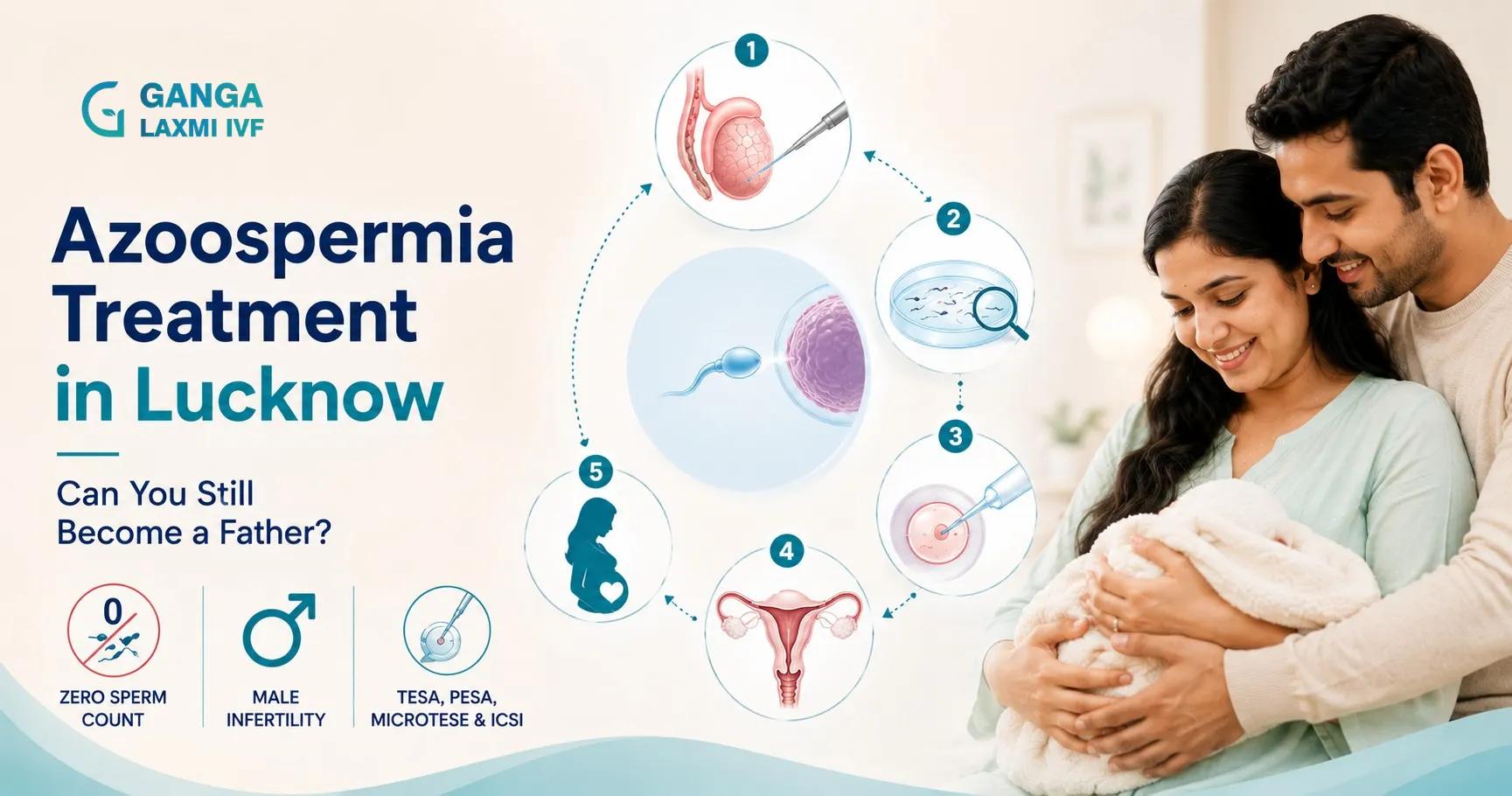
Azoospermia (Zero Sperm Count) Treatment in Lucknow
Diagnosed with zero sperm count? Dr. Kumudini Chauhan explains azoospermia causes and male infertility treatment with TESA, PESA, MicroTESE and ICSI in Lucknow.
Black Period Blood: Causes, Symptoms, Treatment and When to See a Doctor
Black period blood is usually harmless old blood, but it can signal PCOS, low estrogen or an infection. Know the causes, warning signs & when to consult a gynaecologist in Lucknow.