
Every week in my clinic in Gomti Nagar, Lucknow, I sit across from women holding a piece of paper with an AMH number on it (some 0.28, some 0.38), all arriving at the same question after searching online: "Doctor, how do I increase my AMH?"
I want to answer that more honestly than most of what you'll find on the internet, because you deserve the real answer, not just the easiest one to hear.
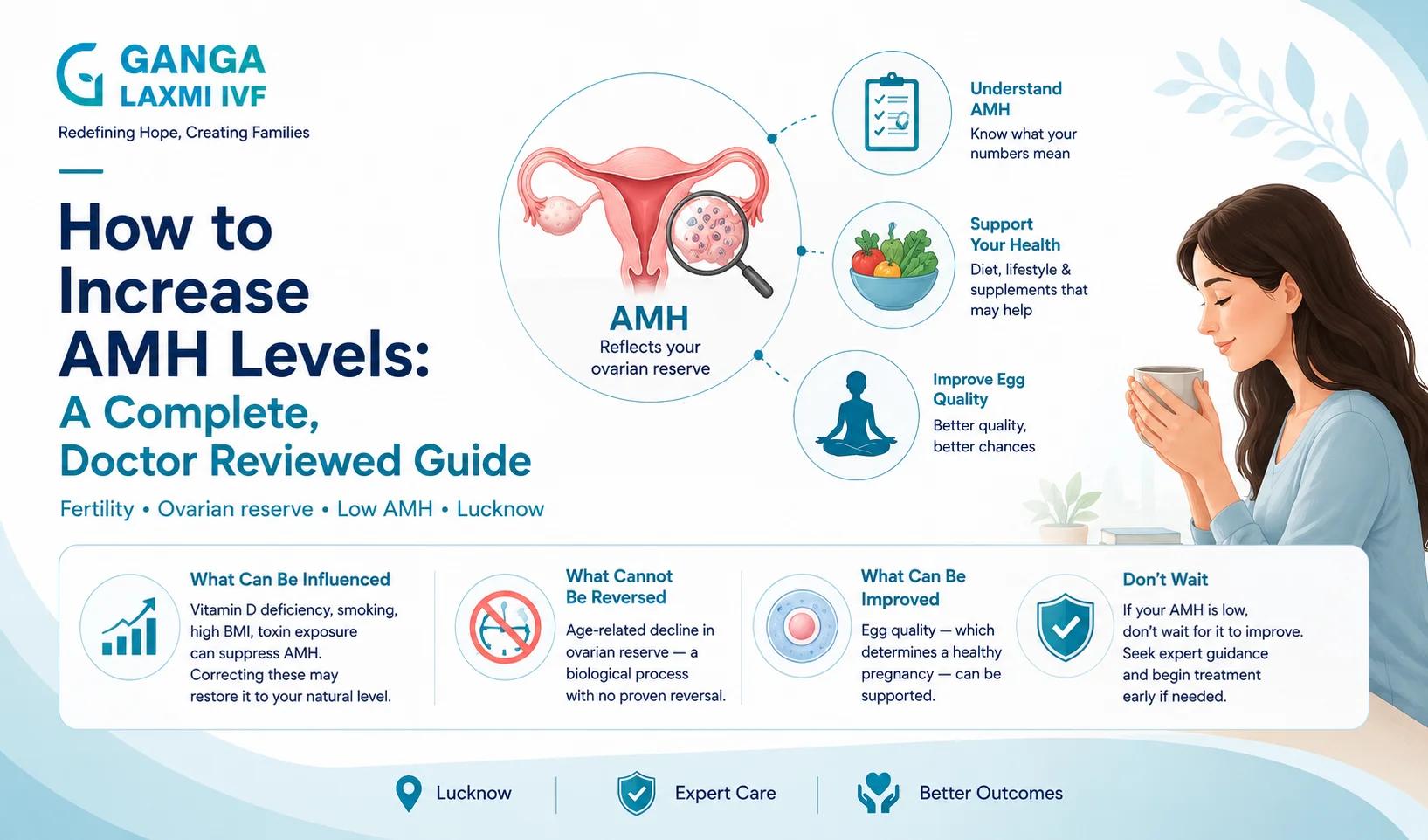
Quick Answer: Can AMH Levels Be Increased?
For featured snippets
AMH (Anti-Müllerian Hormone) reflects the number of eggs remaining in your ovaries. That total is fixed at birth and only declines with age; no medication, food, supplement, or lifestyle change can create new eggs or reverse that decline.
- What can be influenced: Vitamin D deficiency, smoking, high BMI, and toxin exposure can suppress AMH below what it should be for your age. Correcting these may restore it to your natural level.
- What cannot be reversed: Age-related decline in ovarian reserve, a biological process with no proven reversal.
- What can be improved: Egg quality, which determines whether remaining eggs can produce a healthy pregnancy, can be supported through supplements, diet, and lifestyle, even when egg count is fixed.
If your AMH is low, don't wait for it to improve. Seek specialist guidance and, where appropriate, begin treatment while egg quality is still on your side.
AMH at a Glance
Over 60–70% of urban Indian women are Vitamin D deficient or insufficient — a correctable factor that can suppress AMH below its true level.
What Is AMH and Why Does It Matter for Fertility?
AMH stands for Anti-Müllerian Hormone, produced by the granulosa cells that surround your developing follicles. The more follicles developing at a time, the more AMH your ovaries produce, making it a reliable marker of ovarian reserve (how many eggs you have remaining).
Think of AMH as a bank balance for the ovaries: a good balance means time and flexibility, while a lower one means the reserve is shrinking and time matters more.
Above 3.5
What It Generally Indicates
High reserve, common in PCOS; monitor for overstimulation if doing IVF
1.5 to 3.5
What It Generally Indicates
Normal reserve for reproductive-age women
0.5 to 1.5
What It Generally Indicates
Low-normal; monitoring and timely conception advised
Below 0.5
What It Generally Indicates
Low reserve (diminished ovarian reserve, or DOR); specialist input recommended
Below 0.1
What It Generally Indicates
Very low, very limited time; specialist urgency
| AMH Level (ng/mL) | What It Generally Indicates |
|---|---|
| Above 3.5 | High reserve, common in PCOS; monitor for overstimulation if doing IVF |
| 1.5 to 3.5 | Normal reserve for reproductive-age women |
| 0.5 to 1.5 | Low-normal; monitoring and timely conception advised |
| Below 0.5 | Low reserve (diminished ovarian reserve, or DOR); specialist input recommended |
| Below 0.1 | Very low, very limited time; specialist urgency |
Reference ranges vary slightly by lab. Your result should always be interpreted alongside your antral follicle count (AFC) and clinical history, not in isolation.
AMH is also used to predict IVF stimulation response, help diagnose PCOS, monitor chemotherapy effects on ovarian reserve, and support decisions about egg freezing timing.
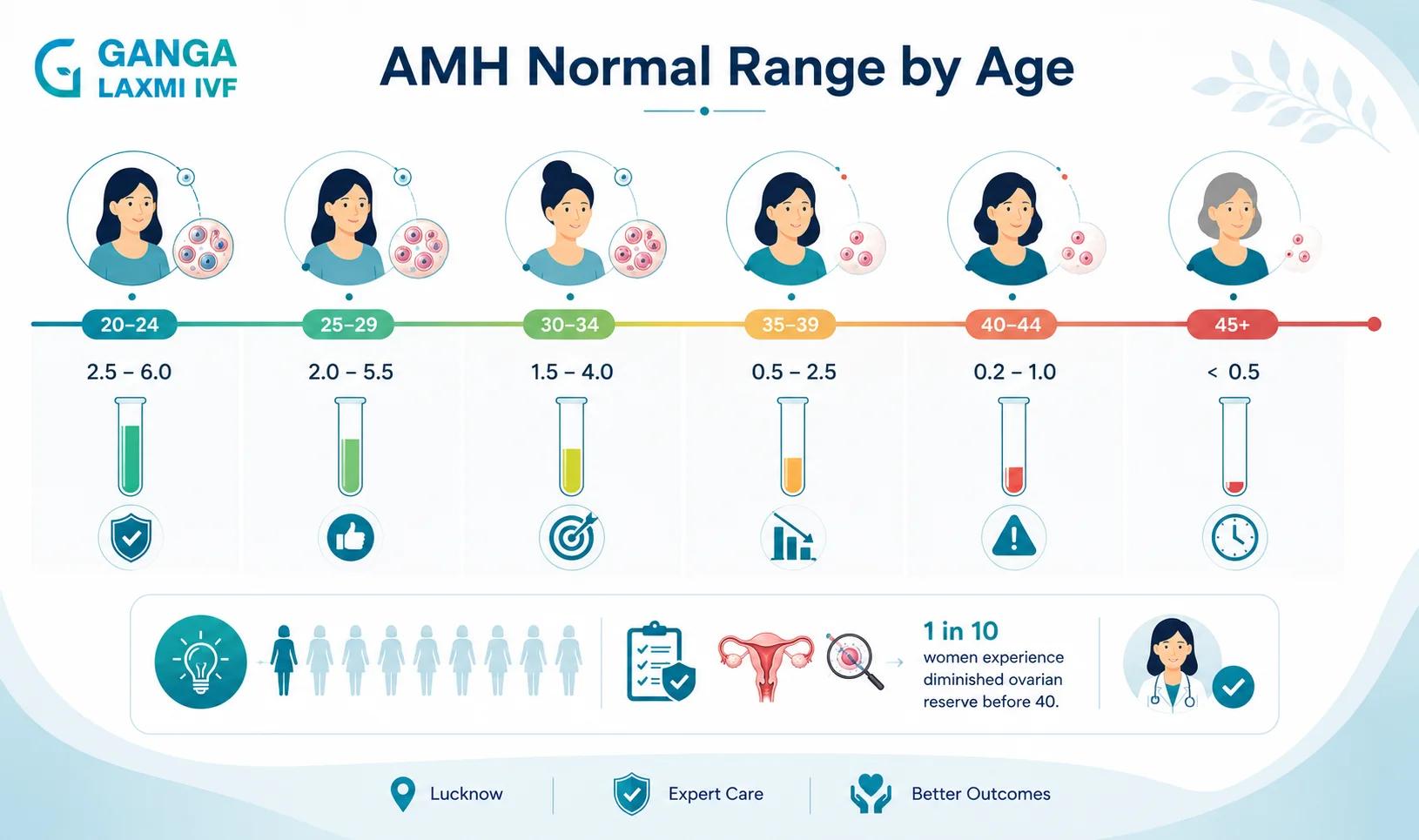
AMH Normal Range by Age
AMH declines progressively with age. These ranges are population averages, not rigid cut-offs. For example, two 34-year-olds with AMH of 1.0 and 2.8 ng/mL have very different reserve pictures despite the same age. Always interpret your result alongside AFC, history, and fertility goals.
20 to 24
Expected AMH Range (ng/mL)
2.5 to 6.0
Clinical Context
Peak reproductive years; high reserve expected
25 to 29
Expected AMH Range (ng/mL)
2.0 to 5.5
Clinical Context
Still high; gradual natural decline beginning
30 to 34
Expected AMH Range (ng/mL)
1.5 to 4.0
Clinical Context
Good reserve; beginning to narrow for some women
35 to 39
Expected AMH Range (ng/mL)
0.5 to 2.5
Clinical Context
Wider variation; decline accelerating for many
40 to 44
Expected AMH Range (ng/mL)
0.2 to 1.0
Clinical Context
Significantly lower; reduced IVF response expected
45 and above
Expected AMH Range (ng/mL)
Below 0.5
Clinical Context
Very low; approaching or in perimenopause for most
| Age Group | Expected AMH Range (ng/mL) | Clinical Context |
|---|---|---|
| 20 to 24 | 2.5 to 6.0 | Peak reproductive years; high reserve expected |
| 25 to 29 | 2.0 to 5.5 | Still high; gradual natural decline beginning |
| 30 to 34 | 1.5 to 4.0 | Good reserve; beginning to narrow for some women |
| 35 to 39 | 0.5 to 2.5 | Wider variation; decline accelerating for many |
| 40 to 44 | 0.2 to 1.0 | Significantly lower; reduced IVF response expected |
| 45 and above | Below 0.5 | Very low; approaching or in perimenopause for most |
Did you know?
Approximately 1 in 10 women experience diminished ovarian reserve before age 40. If you're under 35 and your AMH is below 1.0 ng/mL, an assessment with a fertility specialist is worth prioritising.
What Causes Low AMH?
Low AMH isn't always caused by age. Many patients in their 20s and early 30s have a specific, identifiable reason, and understanding it matters because some causes are modifiable.
Age
How It Reduces AMH
Natural, progressive depletion of eggs throughout life
Notes
Most common cause; unavoidable but can be planned for
Genetics and family history
How It Reduces AMH
If mother or sisters had early menopause, reserve may decline sooner
Notes
Influences urgency of planning
Endometriosis
How It Reduces AMH
Lesions on or near ovaries destroy follicle-containing tissue
Notes
Important cause in younger women; affects reserve and egg quality
Prior ovarian surgery
How It Reduces AMH
Cyst removal can inadvertently remove surrounding follicle tissue
Notes
Even a single cystectomy can reduce AMH noticeably
Smoking
How It Reduces AMH
Cigarette toxins damage oocyte DNA and accelerate atresia
Notes
Smokers have AMH equivalent to women 5–10 years older
Chemotherapy or radiation
How It Reduces AMH
Directly toxic to dividing cells in the ovary
Notes
Oncofertility counselling before cancer treatment recommended
Autoimmune conditions
How It Reduces AMH
Antibodies against ovarian tissue in some diseases
Notes
Lupus, rheumatoid arthritis, thyroid autoimmunity
Turner syndrome
How It Reduces AMH
Abnormal sex chromosome complement
Notes
Usually diagnosed in childhood or adolescence
Idiopathic (no identified cause)
How It Reduces AMH
No specific cause found in a significant proportion
Notes
Genetic factors not yet identified likely involved
| Cause | How It Reduces AMH | Notes |
|---|---|---|
| Age | Natural, progressive depletion of eggs throughout life | Most common cause; unavoidable but can be planned for |
| Genetics and family history | If mother or sisters had early menopause, reserve may decline sooner | Influences urgency of planning |
| Endometriosis | Lesions on or near ovaries destroy follicle-containing tissue | Important cause in younger women; affects reserve and egg quality |
| Prior ovarian surgery | Cyst removal can inadvertently remove surrounding follicle tissue | Even a single cystectomy can reduce AMH noticeably |
| Smoking | Cigarette toxins damage oocyte DNA and accelerate atresia | Smokers have AMH equivalent to women 5–10 years older |
| Chemotherapy or radiation | Directly toxic to dividing cells in the ovary | Oncofertility counselling before cancer treatment recommended |
| Autoimmune conditions | Antibodies against ovarian tissue in some diseases | Lupus, rheumatoid arthritis, thyroid autoimmunity |
| Turner syndrome | Abnormal sex chromosome complement | Usually diagnosed in childhood or adolescence |
| Idiopathic (no identified cause) | No specific cause found in a significant proportion | Genetic factors not yet identified likely involved |
Dr. Kumudini Chauhan's clinical insight
In my practice in Lucknow, endometriosis is one of the most commonly missed causes of low AMH in younger women. Many patients with AMH below 0.5 ng/mL at age 28–32 turn out to have undiagnosed endometriosis. If you have painful periods, pain during intercourse, or unexplained pelvic pain alongside low AMH, an evaluation for endometriosis is essential before any fertility treatment begins.
Signs and Symptoms of Low AMH
Low AMH is often completely silent, discovered only through a blood test. Certain patterns should prompt earlier testing:
Difficulty conceiving after 6–12 months
Why It May Indicate Low AMH
May reflect reduced egg count or poor egg quality
What to Do
Seek fertility evaluation including AMH and AFC
Short menstrual cycles (below 26 days)
Why It May Indicate Low AMH
May reflect declining FSH/oestrogen balance
What to Do
Request AMH and Day 2–3 FSH testing
Very light periods
Why It May Indicate Low AMH
May indicate thinner lining associated with low oestrogen
What to Do
Discuss with a gynaecologist
Poor response in a previous IVF cycle
Why It May Indicate Low AMH
Fewer eggs retrieved than expected for age
What to Do
AMH test before next cycle essential
Family history of early menopause
Why It May Indicate Low AMH
Genetic predisposition to earlier reserve decline
What to Do
Test AMH in late 20s or early 30s
Previous ovarian surgery
Why It May Indicate Low AMH
Particularly cyst removal or endometriosis surgery
What to Do
AMH should be tested after any ovarian surgery
Previous cancer treatment
Why It May Indicate Low AMH
Chemotherapy and radiation are directly gonadotoxic
What to Do
Oncofertility consultation and AMH monitoring
| Sign or Circumstance | Why It May Indicate Low AMH | What to Do |
|---|---|---|
| Difficulty conceiving after 6–12 months | May reflect reduced egg count or poor egg quality | Seek fertility evaluation including AMH and AFC |
| Short menstrual cycles (below 26 days) | May reflect declining FSH/oestrogen balance | Request AMH and Day 2–3 FSH testing |
| Very light periods | May indicate thinner lining associated with low oestrogen | Discuss with a gynaecologist |
| Poor response in a previous IVF cycle | Fewer eggs retrieved than expected for age | AMH test before next cycle essential |
| Family history of early menopause | Genetic predisposition to earlier reserve decline | Test AMH in late 20s or early 30s |
| Previous ovarian surgery | Particularly cyst removal or endometriosis surgery | AMH should be tested after any ovarian surgery |
| Previous cancer treatment | Chemotherapy and radiation are directly gonadotoxic | Oncofertility consultation and AMH monitoring |
What low AMH does not cause: irregular periods, pain, hormonal symptoms, or weight changes. If present, these have their own causes that should be evaluated separately.
Can You Get Pregnant Naturally with Low AMH?
The answer is: yes, often.
The most important study here was published in the New England Journal of Medicine in 2017 by Steiner et al. They followed 750 women without a history of infertility who had just begun trying to conceive. After one year, women with low AMH became pregnant just as often as women with normal AMH.
In otherwise fertile women (open tubes, normal uterus, normal sperm), low AMH does not predict inability to conceive naturally. Important qualifications:
- This applies to women without pre-existing infertility. In women already having difficulty conceiving, low AMH is clinically meaningful.
- Low AMH does not protect egg quality. A woman with low AMH at 38 has fewer, and lower quality, eggs than at 28.
- Low AMH predicts poor response to IVF stimulation medications.
If you have low AMH, are under 35, have been trying for fewer than 6 months, and have no other fertility factors, natural conception remains a real possibility. But if you've been trying for 6 months without success, or are over 35, a fertility evaluation is appropriate now.
Low AMH vs Poor Egg Quality: What's the Difference?
What it measures
Low AMH (Diminished Ovarian Reserve)
Quantity: how many eggs remain
Poor Egg Quality
Health: whether remaining eggs can produce a viable embryo
Primary determinant
Low AMH (Diminished Ovarian Reserve)
Egg count, which declines from birth
Poor Egg Quality
Maternal age and genetic/environmental factors
Effect on natural conception
Low AMH (Diminished Ovarian Reserve)
Does not predict inability in fertile women
Poor Egg Quality
Directly affects embryo quality and implantation
Effect on IVF
Low AMH (Diminished Ovarian Reserve)
Fewer eggs retrieved; higher cancellation risk
Poor Egg Quality
Lower fertilisation rates; more abnormal embryos
Can it be improved?
Low AMH (Diminished Ovarian Reserve)
No, egg count cannot be increased
Poor Egg Quality
Yes, partially (via supplements, diet, lifestyle)
Test used
Low AMH (Diminished Ovarian Reserve)
AMH blood test + AFC
Poor Egg Quality
Assessed via IVF outcomes, embryo grading, PGTA
| Factor | Low AMH (Diminished Ovarian Reserve) | Poor Egg Quality |
|---|---|---|
| What it measures | Quantity: how many eggs remain | Health: whether remaining eggs can produce a viable embryo |
| Primary determinant | Egg count, which declines from birth | Maternal age and genetic/environmental factors |
| Effect on natural conception | Does not predict inability in fertile women | Directly affects embryo quality and implantation |
| Effect on IVF | Fewer eggs retrieved; higher cancellation risk | Lower fertilisation rates; more abnormal embryos |
| Can it be improved? | No, egg count cannot be increased | Yes, partially (via supplements, diet, lifestyle) |
| Test used | AMH blood test + AFC | Assessed via IVF outcomes, embryo grading, PGTA |
AMH tells you how many eggs you have. Age tells you how good they are.
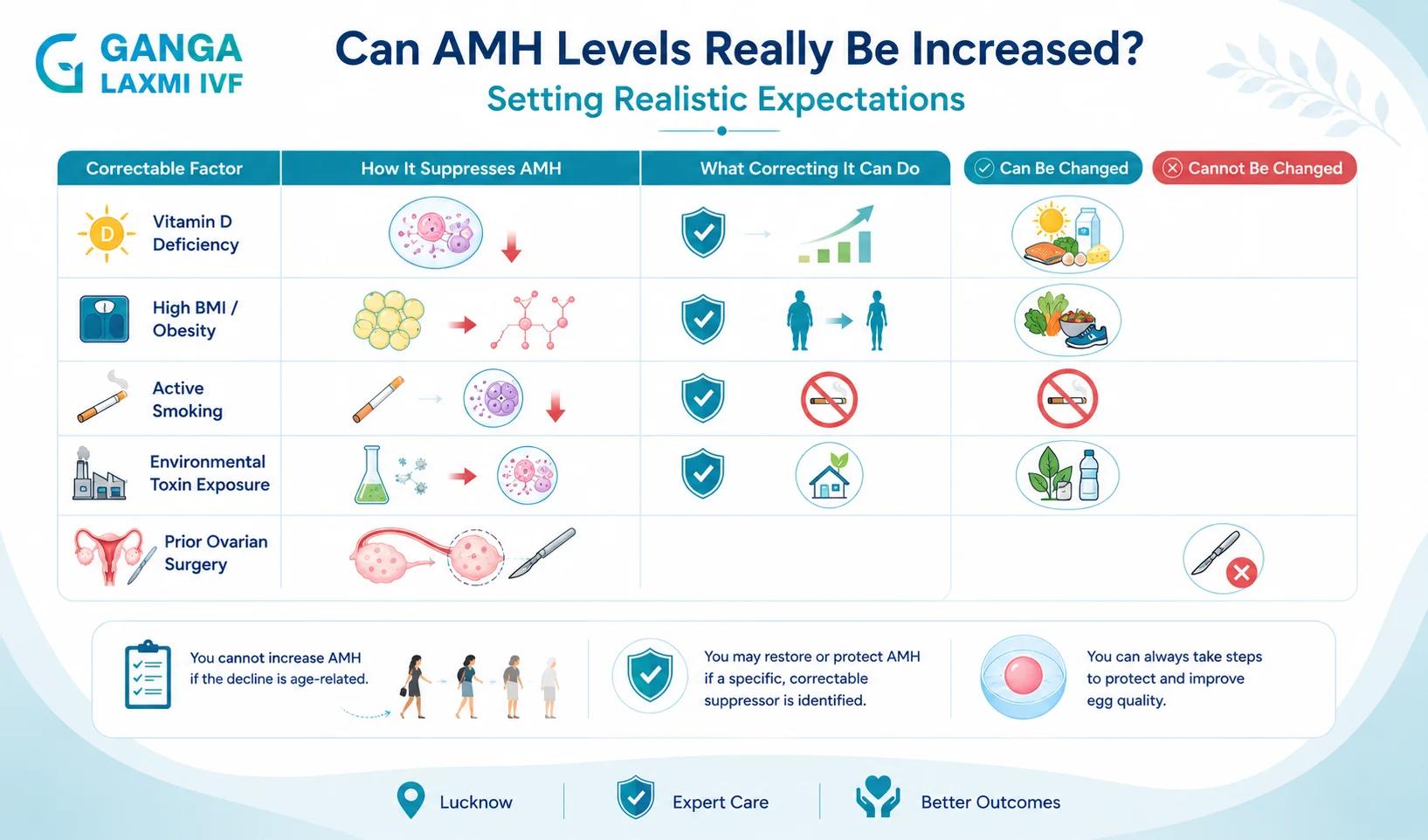
Can AMH Levels Really Be Increased? Setting Realistic Expectations
Vitamin D deficiency
How It Suppresses AMH
Receptors on granulosa cells; deficiency impairs follicle function
What Correcting It Can Do
Modest AMH improvement in non-PCOS women in some studies
High BMI / obesity
How It Suppresses AMH
Excess adipose tissue alters hormonal signalling
What Correcting It Can Do
Weight normalisation may restore AMH closer to age-appropriate level
Active smoking
How It Suppresses AMH
Toxins damage oocytes and accelerate ovarian ageing
What Correcting It Can Do
Stopping smoking may slow further decline
Environmental toxin exposure
How It Suppresses AMH
Endocrine disruptors interfere with follicle development
What Correcting It Can Do
Reducing exposure is protective
Prior ovarian surgery
How It Suppresses AMH
Inadvertent removal of follicle-containing tissue
What Correcting It Can Do
Cannot be reversed; avoid unnecessary ovarian surgery
| Correctable Factor | How It Suppresses AMH | What Correcting It Can Do |
|---|---|---|
| Vitamin D deficiency | Receptors on granulosa cells; deficiency impairs follicle function | Modest AMH improvement in non-PCOS women in some studies |
| High BMI / obesity | Excess adipose tissue alters hormonal signalling | Weight normalisation may restore AMH closer to age-appropriate level |
| Active smoking | Toxins damage oocytes and accelerate ovarian ageing | Stopping smoking may slow further decline |
| Environmental toxin exposure | Endocrine disruptors interfere with follicle development | Reducing exposure is protective |
| Prior ovarian surgery | Inadvertent removal of follicle-containing tissue | Cannot be reversed; avoid unnecessary ovarian surgery |
The most accurate framing: you cannot increase AMH if the decline is age-related. You may restore or protect AMH if a specific, correctable suppressor is identified. And in all cases, you can take meaningful steps to protect and improve egg quality.
Myth vs Fact
Low AMH means infertility
Fact
It means fewer eggs than average for your age. Many women with low AMH conceive naturally or with treatment
Supplements can create new eggs
Fact
No supplement creates eggs; some may support egg quality or correct a suppressor like Vitamin D deficiency
IVF is impossible with low AMH
Fact
There is no minimum AMH below which IVF cannot be attempted, though expectations per cycle differ
AMH measures egg quality
Fact
AMH measures egg quantity. Age, not AMH, is the main driver of egg quality
Egg freezing is not possible with low AMH
Fact
Still possible, though fewer eggs may be retrieved per cycle, making earlier action more valuable
| Myth | Fact |
|---|---|
| Low AMH means infertility | It means fewer eggs than average for your age. Many women with low AMH conceive naturally or with treatment |
| Supplements can create new eggs | No supplement creates eggs; some may support egg quality or correct a suppressor like Vitamin D deficiency |
| IVF is impossible with low AMH | There is no minimum AMH below which IVF cannot be attempted, though expectations per cycle differ |
| AMH measures egg quality | AMH measures egg quantity. Age, not AMH, is the main driver of egg quality |
| Egg freezing is not possible with low AMH | Still possible, though fewer eggs may be retrieved per cycle, making earlier action more valuable |
Foods That May Support AMH and Ovarian Health
No specific food has been proven in clinical trials to directly increase AMH. What the evidence supports is that certain nutrients protect ovarian cells from oxidative damage and improve the environment in which eggs develop.
Nutrients That Support Ovarian Health
Folate
Why It Matters
Linked to better antral follicle counts; essential for DNA synthesis in developing eggs
Best Food Sources
Spinach, kale, chickpeas, lentils, asparagus
Omega-3 fatty acids
Why It Matters
Reduce follicle inflammation; improve egg cell membrane composition
Best Food Sources
Fatty fish, walnuts, flaxseeds, chia seeds
Vitamin D
Why It Matters
Receptors on ovarian cells; deficiency common in India and may suppress follicle function
Best Food Sources
Fatty fish, eggs, fortified milk, daily sun exposure
Zinc
Why It Matters
Essential for egg maturation and hormonal signalling
Best Food Sources
Oysters, chickpeas, pumpkin seeds, lentils
Vitamin E
Why It Matters
Antioxidant that protects egg cell membranes
Best Food Sources
Almonds, sunflower seeds, avocado, olive oil
CoQ10 (through food)
Why It Matters
Mitochondrial energiser supporting energy production in egg cells
Best Food Sources
Organ meats, sardines, spinach, broccoli, peanuts
| Nutrient | Why It Matters | Best Food Sources |
|---|---|---|
| Folate | Linked to better antral follicle counts; essential for DNA synthesis in developing eggs | Spinach, kale, chickpeas, lentils, asparagus |
| Omega-3 fatty acids | Reduce follicle inflammation; improve egg cell membrane composition | Fatty fish, walnuts, flaxseeds, chia seeds |
| Vitamin D | Receptors on ovarian cells; deficiency common in India and may suppress follicle function | Fatty fish, eggs, fortified milk, daily sun exposure |
| Zinc | Essential for egg maturation and hormonal signalling | Oysters, chickpeas, pumpkin seeds, lentils |
| Vitamin E | Antioxidant that protects egg cell membranes | Almonds, sunflower seeds, avocado, olive oil |
| CoQ10 (through food) | Mitochondrial energiser supporting energy production in egg cells | Organ meats, sardines, spinach, broccoli, peanuts |
Foods to Limit or Avoid
Dietary Cautions for Ovarian Reserve & Egg Health
Trans Fats & Processed Foods
Increases systemic inflammation and damages delicate egg cell membranes
Excess Sugar & Refined Carbs
Triggers insulin spikes that impair follicle development and hormone balance
Alcohol Consumption
Even moderate intake elevates pelvic inflammation and disrupts ovulation
Excess Caffeine (>200mg/day)
High daily intake is correlated with reduced conception rates
Plastics (BPA & Phthalates)
Avoid food heated or stored in plastic to prevent synthetic estrogen disruption
The Mediterranean-style diet, rich in vegetables, fruit, whole grains, legumes, olive oil, fish, nuts and seeds, has the strongest evidence for ovarian health and better IVF outcomes.
Lifestyle Changes That Help Protect Egg Reserve
- Maintain a healthy weight. Both underweight and overweight status affect ovarian function. If BMI is above 27 or below 18.5, optimising it is one of the most meaningful fertility steps.
- Exercise: more is not better. Moderate exercise supports hormone balance. Heavy, high-intensity exercise can raise cortisol and disrupt ovulation.
- Sleep. Melatonin during deep sleep protects eggs from oxidative damage. Target 7–9 hours on a consistent schedule.
- Stress reduction. Chronic stress elevates cortisol, which can disrupt ovulation and the environment in which eggs develop.
- Stop smoking. Smokers have AMH equivalent to women 5–10 years older. Quitting can at least stop further progression.
- Reduce environmental toxin exposure. Store food in glass or stainless steel, choose paraben-free personal care products, eat organic where accessible.
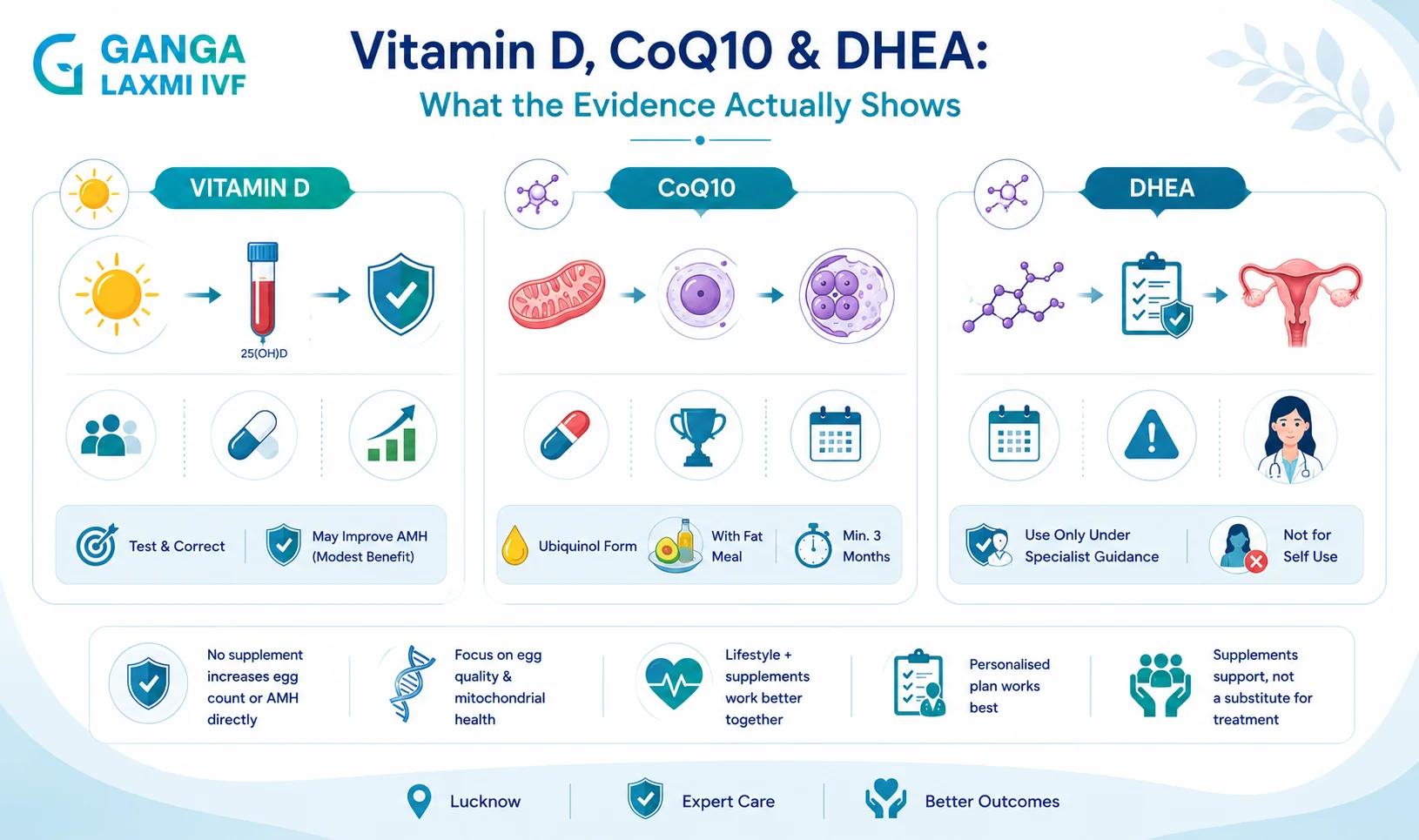
Vitamin D, CoQ10, and DHEA: What the Evidence Actually Shows
Vitamin D
Over 60–70% of urban Indian women are deficient or insufficient. Correcting documented deficiency may bring modest AMH improvement, particularly in non-PCOS women. Get your serum 25-hydroxyvitamin D tested; if below 30 ng/mL, 1,000–2,000 IU daily is generally appropriate.
CoQ10 (Coenzyme Q10)
CoQ10 doesn't increase AMH or egg count, but a 2025 meta-analysis found 200–600 mg daily was associated with better fertilisation rates, more viable embryos, and improved embryo quality in women with diminished ovarian reserve. Preferred form is ubiquinol, taken with a fat-containing meal, for a minimum of 3 months before stimulation.
DHEA (Dehydroepiandrosterone)
A 2024 meta-analysis in Fertility and Sterility found courses over 2 months outperformed shorter ones. However, DHEA is a hormone, not a vitamin. It carries risks including acne, oily skin, and can worsen PCOS. I prescribe DHEA only to selected patients with confirmed DOR, low DHEA-S levels, and no PCOS. Do not self-prescribe.
Research at a Glance
- Steiner et al., NEJM, 2017: low AMH did not predict inability to conceive naturally in 750 women without pre-existing infertility.
- Folate study, Nutrients, 2024: adequate folate intake linked to better antral follicle counts.
- CoQ10 meta-analysis, 2025: 200–600 mg daily associated with better fertilisation and embryo quality in DOR.
- DHEA meta-analysis, Fertility and Sterility, 2024: supplementation over 2 months showed better outcomes than shorter courses.
Medical Options When AMH Is Low
- Active monitoring with timed conception: for younger women with mildly low AMH and otherwise normal factors (time-limited).
- Ovulation induction with IUI: reasonable intermediate step when AMH is low but ovulation continues.
- IVF with an individualised stimulation protocol : often the most efficient path, with the protocol calibrated to your AMH and AFC.
- Egg banking across multiple cycles: where a single cycle is likely to produce very few eggs.
- Donor egg IVF: when AMH is very low, multiple cycles have failed, or age-related egg quality is the limiting factor.
What Happens at Your First Low AMH Consultation?
At Ganga Laxmi IVF in Gomti Nagar, a first low AMH consultation covers:
- Detailed history: how long trying, cycle regularity, pelvic pain, prior surgery, family history, partner fertility.
- Transvaginal ultrasound and AFC: real-time follicle count alongside AMH blood test.
- Hormonal blood panel: AMH, Day 2–3 FSH/LH, oestradiol, TSH, prolactin, testosterone, Vitamin D.
- Male partner evaluation: semen analysis at the first consultation.
- Treatment plan: clear explanation, investigation plan, and honest expectations on timelines.
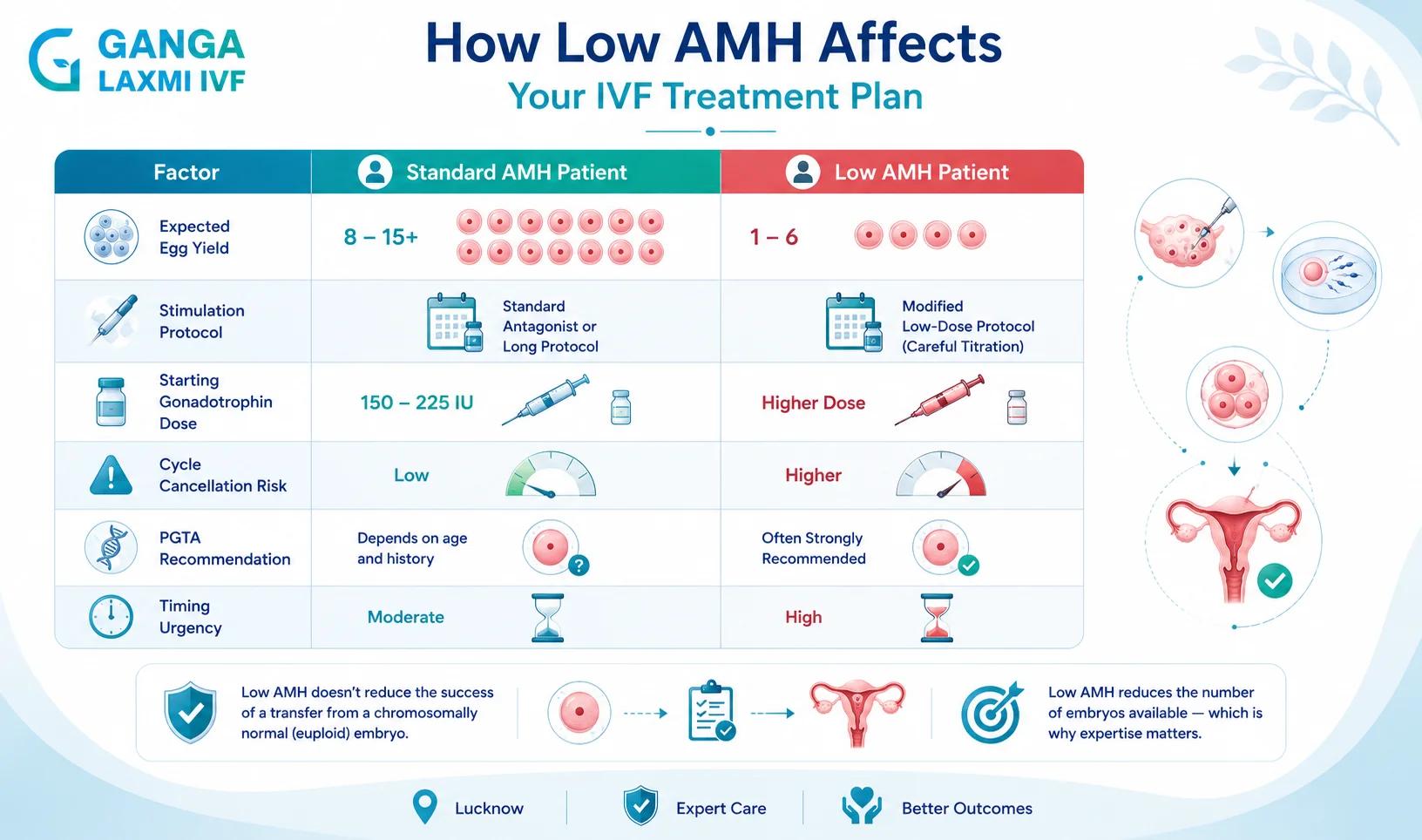
How Low AMH Affects Your IVF Treatment Plan
Expected egg yield
Standard AMH Patient
8 to 15+ eggs per retrieval
Low AMH Patient
1 to 6 eggs per retrieval
Stimulation protocol
Standard AMH Patient
Standard antagonist or long protocol
Low AMH Patient
Modified low-dose protocol with careful titration
Starting gonadotrophin dose
Standard AMH Patient
Standard (150–225 IU)
Low AMH Patient
Higher starting dose with careful monitoring
Cycle cancellation risk
Standard AMH Patient
Low
Low AMH Patient
Higher
PGTA recommendation
Standard AMH Patient
Depends on age and history
Low AMH Patient
Often strongly recommended
Timing urgency
Standard AMH Patient
Moderate
Low AMH Patient
High — egg quality declines with age
| Factor | Standard AMH Patient | Low AMH Patient |
|---|---|---|
| Expected egg yield | 8 to 15+ eggs per retrieval | 1 to 6 eggs per retrieval |
| Stimulation protocol | Standard antagonist or long protocol | Modified low-dose protocol with careful titration |
| Starting gonadotrophin dose | Standard (150–225 IU) | Higher starting dose with careful monitoring |
| Cycle cancellation risk | Low | Higher |
| PGTA recommendation | Depends on age and history | Often strongly recommended |
| Timing urgency | Moderate | High — egg quality declines with age |
Low AMH does not reduce the success of an IVF transfer from a chromosomally normal (euploid) embryo. What low AMH does is reduce the number of embryos available to test and transfer, which is why protocol design and laboratory expertise matter enormously.
When Should You Get Your AMH Tested?
Consider getting an AMH blood test if any of the following apply to your situation:
Flexible Testing Day
AMH can be tested at any point in your menstrual cycle. Unlike FSH, which requires a specific Day 2 or Day 3 blood draw, AMH levels remain steady throughout your cycle.
Frequently Asked Questions
Not meaningfully in the sense of restoring lost egg reserve, since that decline is irreversible. AMH can fluctuate modestly month to month, and if a correctable factor such as Vitamin D deficiency, smoking, or high BMI was suppressing your AMH below its true level, addressing it may show up as a measurable improvement in the reading. Do not confuse this fluctuation or correction with a genuine increase in ovarian reserve.
No food directly increases AMH by creating new eggs. A Mediterranean-style diet, rich in vegetables, fruits, whole grains, legumes, olive oil, fatty fish, nuts and seeds, provides the best nutritional support for ovarian health. Key nutrients include folate (spinach, chickpeas, lentils), omega-3 fatty acids (salmon, walnuts, flaxseeds), Vitamin D (fatty fish, eggs, sun exposure), and antioxidants (berries, pomegranate, amla, colourful vegetables).
No. Low AMH means fewer eggs remaining than typically expected for your age. Early menopause (premature ovarian insufficiency) means the ovaries have essentially stopped functioning before age 40. Many women with low AMH continue to ovulate regularly, have normal cycles, and can conceive naturally or with treatment. Low AMH is a signal that time is a factor, not a diagnosis of infertility or menopause.
No. A 2017 study of 750 women without a history of infertility found that those with low AMH became pregnant just as often in the following year as those with normal AMH. In women without pre-existing infertility, low AMH does not predict inability to conceive naturally. Low AMH matters most in assisted reproduction, where it predicts ovarian response to stimulation.
Egg development takes approximately 3 to 6 months. Any supplement started today will not affect eggs that ovulate this month. The earliest you would expect meaningful changes in egg quality from supplementation is after 3 months. For CoQ10, a minimum of 3 months before an IVF retrieval is the standard clinical recommendation.
No. DHEA is a steroid hormone precursor that can cause androgenic side effects, worsen PCOS in women with elevated androgens, and may interact with other hormonal conditions. Have your DHEA-S blood level tested before considering supplementation, and take it only under the supervision of a fertility specialist who has reviewed your complete hormonal profile.
There is no absolute minimum AMH level below which IVF cannot be attempted. Very low AMH means fewer eggs per retrieval, higher cycle cancellation risk, and more cycles may be needed, but it does not make IVF impossible. The clinical conversation about whether to proceed depends on AMH, age, antral follicle count, partner fertility, and personal goals, rather than a single threshold number.
Low AMH itself does not directly cause miscarriage. What it reflects (specifically declining egg reserve) is often accompanied by declining egg quality with age. Chromosomally abnormal eggs are the primary cause of early miscarriage. In younger women with low AMH but good egg quality, miscarriage rates should not be significantly elevated. PGTA in IVF can identify chromosomally normal embryos, significantly reducing miscarriage risk regardless of AMH level.
PCOS most commonly causes elevated AMH, often 2 to 4 times higher than in women without PCOS of the same age, due to the large number of small antral follicles. Elevated AMH is now included as a diagnostic criterion for PCOS in some classification systems. PCOS does not protect against age-related ovarian reserve decline. In rare cases, women with PCOS can also have low AMH, often after prior ovarian surgery or with co-existing endometriosis.
Yes. AMH is a blood test available to any woman regardless of marital status, and no prescription is required at most pathology laboratories. AMH testing is appropriate for any woman who wants to understand her fertility timeline. Ganga Laxmi IVF in Lucknow provides AMH testing and confidential fertility consultations for unmarried women.
There is no strong evidence that caffeine lowers AMH itself. High intake, above roughly 200 mg daily, has been linked to reduced fertility in some studies, but this is a separate effect on conception chances rather than on egg count. Moderate intake is generally considered acceptable.
Thyroid disorders do not directly change your AMH number, but they are common in Indian women and can independently impair fertility and cycle regularity, which is why TSH is checked at every AMH consultation alongside FSH, LH, and prolactin.
Chronic stress does not appear to reduce egg count directly, but the cortisol it raises can suppress ovulation and disrupt the hormonal environment in which eggs develop, which is why stress reduction is part of standard lifestyle recommendations for low AMH.
Sooner rather than later. Egg quality declines with age even as AMH declines further, so a woman in her early 30s with low AMH will generally freeze more, and better quality, eggs than the same woman a few years later. There is no single best age; the right time depends on current AMH, antral follicle count, and personal plans, which are best discussed with a fertility specialist.
References
- Steiner AZ, et al. Association Between Biomarkers of Ovarian Reserve and Infertility Among Older Women of Reproductive Age. New England Journal of Medicine, 2017.
- Folate and antral follicle count study. Nutrients, 2024.
- CoQ10 supplementation meta-analysis in diminished ovarian reserve, 2025.
- DHEA supplementation meta-analysis. Fertility and Sterility, 2024.
- DHEA clinical study in 122 women with diminished ovarian reserve, 2024.
You Have Options. Let's Find the Right One for You.
A low AMH number is not the end of your fertility story; it is information, most useful when it leads to a specific, personalised plan rather than panic or denial. Women come to Ganga Laxmi IVF in Gomti Nagar from across Lucknow and Uttar Pradesh after receiving low AMH reports with no guidance.
Related reading:
- PCOS and Pregnancy: Can You Conceive with PCOS?
- IVF After 40 in Lucknow: Advanced Age Fertility, PGT, and Realistic Hope
- Laser Hatching and PGT After Failed IVF
About the author
Dr. Kumudini Chauhan

Dr. Kumudini Chauhan
Low AMH & ovarian reserve
Dr. Chauhan is a senior gynaecologist and infertility specialist in Gomti Nagar, Lucknow with over 20 years of experience. She is dedicated to providing honest, evidence-based guidance to couples navigating fertility challenges.
Keep reading
Related articles
Blocked Fallopian Tube Treatment in Lucknow: Causes, HSG Test, IVF & Pregnancy Options
Blocked fallopian tubes are a leading cause of female infertility. Dr. Kumudini Chauhan explains causes, HSG testing and IVF options in Lucknow.
Azoospermia (Zero Sperm Count) Treatment in Lucknow
Diagnosed with zero sperm count? Dr. Kumudini Chauhan explains azoospermia causes and male infertility treatment with TESA, PESA, MicroTESE and ICSI in Lucknow.
Black Period Blood: Causes, Symptoms, Treatment and When to See a Doctor
Black period blood is usually harmless old blood, but it can signal PCOS, low estrogen or an infection. Know the causes, warning signs & when to consult a gynaecologist in Lucknow.

Kangaroo Mother Care (KMC): A Simple Yet Powerful Way to Save Newborn Lives
What is Kangaroo Mother Care? Learn how skin-to-skin contact saves premature babies, improves breastfeeding, and supports growth. A complete KMC guide.