
Losing a pregnancy once is a grief that is hard to put into words. Losing two or more is something that changes the way a couple thinks about the future. If you are reading this, you are probably not here for reassurance. You are here for answers.
Recurrent miscarriage, baar baar garbhapat, is defined as two or more pregnancy losses. It is not simply bad luck and it is not your fault. In most cases it has a cause that can be investigated and, in many cases, a treatment that can help. Dr. Kumudini Chauhan at Ganga Laxmi IVF, Lucknow, has guided many couples through exactly this process. This article explains what she looks for, what she tests, and what she does when she finds a cause.
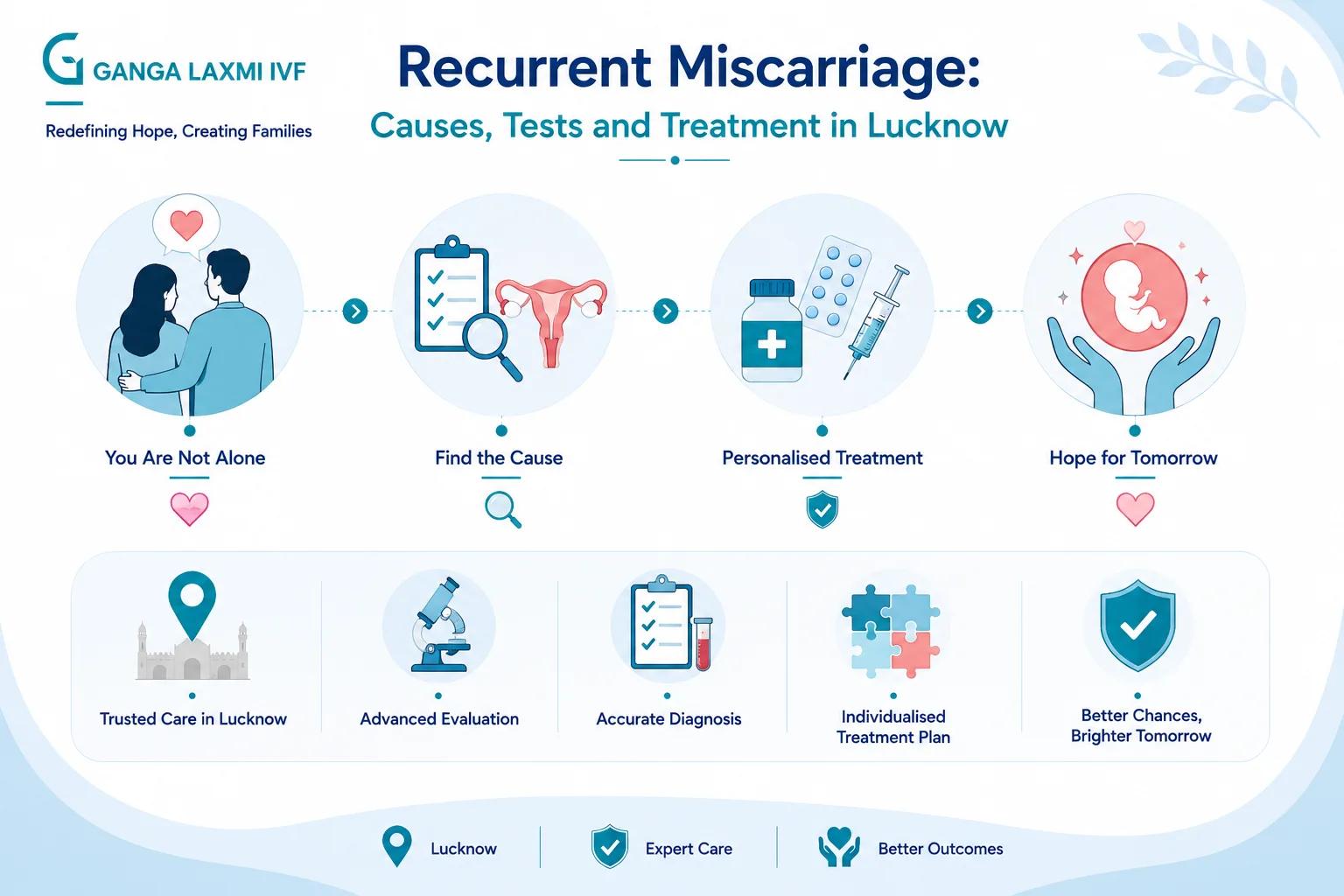
What Is Recurrent Miscarriage? The 2026 ASRM Definition
Recurrent miscarriage, also called recurrent pregnancy loss (RPL), means two or more pregnancy losses. Under the latest 2026 ASRM Committee Opinion, the losses do not have to be consecutive, and pregnancy losses confirmed by blood or urine hCG — including very early biochemical pregnancies — may also be included in the count. This is a meaningful update from older guidance, which required losses to be consecutive.
The ASRM also updated its recommendation for when investigation should begin: after two losses, not three. Waiting for a third loss causes unnecessary emotional and physical harm to couples who deserve answers sooner. At Ganga Laxmi IVF, a full evaluation is offered after two losses.
There are two types:
- Primary recurrent miscarriage means losses without any successful pregnancy before them.
- Secondary recurrent miscarriage means losses that occurred after at least one successful pregnancy. Secondary recurrent miscarriage generally carries a somewhat better prognosis, but both types deserve the same systematic investigation.
Reference: ASRM Committee Opinion: Recurrent Pregnancy Loss (2026)
What Causes Recurrent Miscarriage?
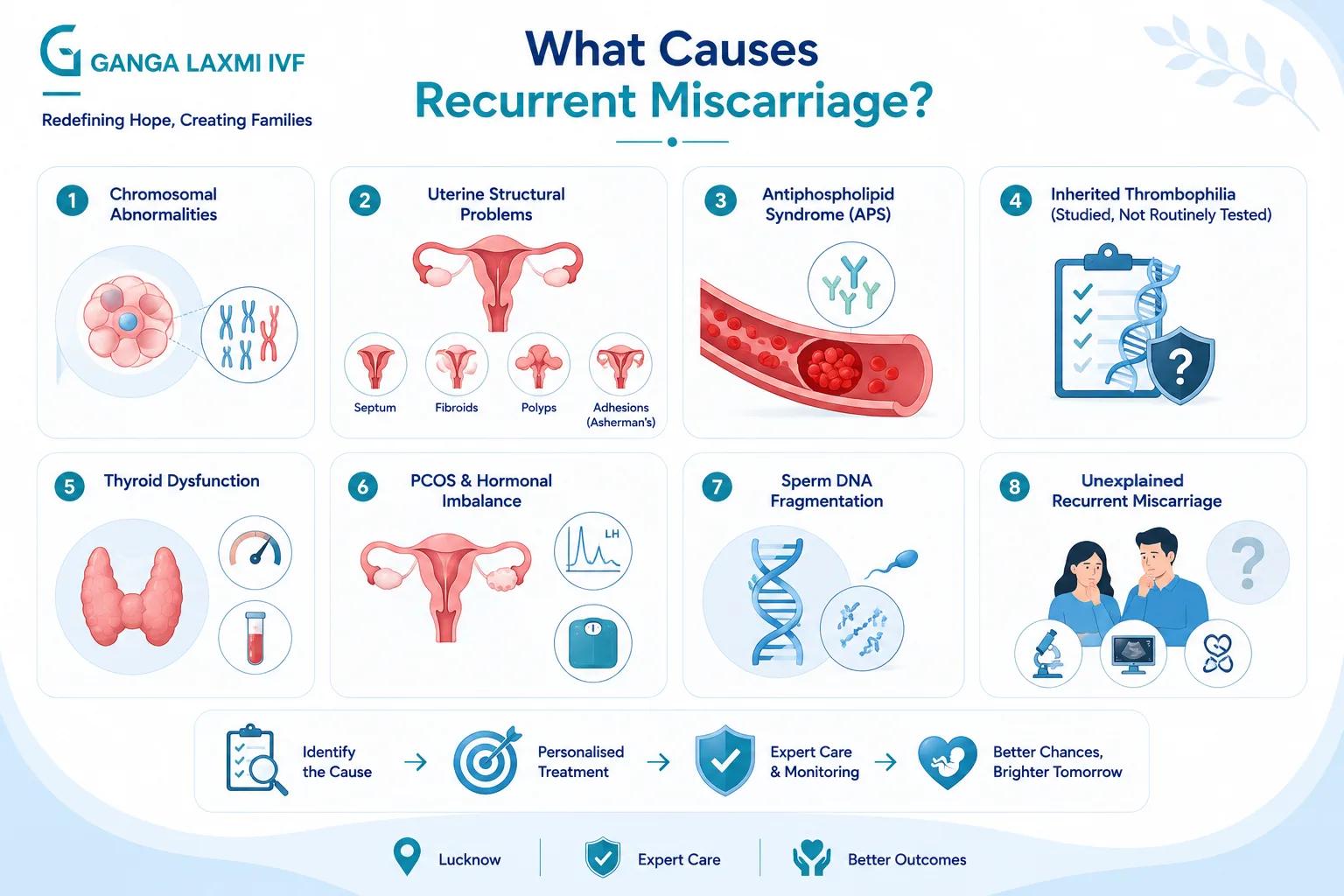
Dr. Kumudini Chauhan looks for specific causes in every patient she sees with recurrent losses. Here are the most common reasons.
Chromosomal Abnormalities in the Embryo
Chromosomal abnormalities are the most common cause of individual early miscarriages. As a fertilised egg divides, errors in chromosome distribution can occur. The resulting embryo cannot develop normally and the pregnancy ends.
Chromosomal error rates increase with maternal age, which is why recurrent miscarriage becomes more common in women in their late 30s and early 40s. However, chromosomal causes can occur at any age.
Uterine Structural Problems
Abnormalities inside the uterine cavity can prevent implantation or disrupt early pregnancy development. These include:
- Uterine septum: a wall of tissue running down the middle of the cavity, the most common correctable structural cause
- Submucosal fibroids: fibroids growing inside the cavity that distort its shape
- Endometrial polyps: small growths on the uterine lining
- Asherman's syndrome: intrauterine adhesions (scar tissue) from prior surgery or infection
Some of these may require more detailed assessment, such as 3D ultrasound or hysteroscopic evaluation and treatment, when a standard ultrasound does not provide enough information.
Antiphospholipid Syndrome (APS)
APS is an autoimmune condition in which the body produces antibodies that cause abnormal blood clotting in the small vessels supplying the placenta. This cuts off the embryo's blood supply and causes pregnancy loss, often in the second trimester. APS is one of the most treatable causes of recurrent miscarriage, with established protocols using low-dose aspirin combined with low-molecular-weight heparin.
Inherited Thrombophilia: A Studied but Not Routinely Tested Factor
Inherited thrombophilias — including Factor V Leiden mutation, MTHFR variant, and deficiencies of Protein C and Protein S — have been investigated as possible contributors to recurrent pregnancy loss. However, the relationship between these variants and RPL is not clearly established, and treating a positive result has not been shown to reliably improve outcomes. For this reason, the 2026 ASRM guidance does not recommend routine inherited thrombophilia screening in RPL (see “Investigations for Recurrent Miscarriage” below). This is distinct from antiphospholipid syndrome above, which is an acquired condition with an established, evidence-based treatment.
Thyroid Dysfunction
Both underactive and overactive thyroid, when inadequately controlled, are associated with pregnancy loss. Thyroid function is one of the most commonly correctable causes of recurrent miscarriage, and it is straightforward to test and treat. Dr. Kumudini Chauhan includes thyroid function testing in every recurrent miscarriage workup, without exception.
PCOS and Hormonal Imbalance
PCOS is associated with metabolic and reproductive factors — elevated luteinising hormone (LH), insulin resistance, and hormonal imbalance — that may affect egg quality and uterine receptivity, but PCOS alone should not be assumed to be the cause of recurrent pregnancy loss. This is particularly relevant for patients in Uttar Pradesh, where PCOS prevalence is high. Dr. Chauhan addresses the hormonal environment before the next conception attempt when PCOS is identified in a patient with recurrent losses.
Sperm DNA Fragmentation
Recurrent miscarriage is not exclusively a female-side concern. Even when a male partner's standard semen analysis is entirely normal, high sperm DNA fragmentation can contribute to embryo quality problems and early pregnancy losses. Dr. Kumudini Chauhan recommends sperm DNA fragmentation testing for the male partner in appropriate cases, particularly when female-side investigations are negative.
Unexplained Recurrent Miscarriage
In many couples with recurrent pregnancy loss, no single clear cause is identified even after a thorough investigation. This is known as unexplained recurrent pregnancy loss. It is frustrating, but a normal investigation does not mean treatment cannot help — ongoing monitoring and supportive care in early pregnancy, along with IVF and PGT-A testing where appropriate, have improved outcomes significantly for these couples.
Can Genetic Testing Be Done on Miscarriage Tissue?
This is an important investigation that is often not discussed with couples after a loss, and it is newly emphasised in the 2026 ASRM guidance.
Where miscarriage tissue is available — either passed naturally or obtained during a surgical procedure (D&C) — chromosome evaluation of that tissue can often identify whether a chromosomal abnormality was the cause of that specific loss. This matters because:
- A chromosomally abnormal miscarriage (aneuploid) is most likely a sporadic event that does not necessarily indicate an ongoing problem in the parents
- A chromosomally normal miscarriage (euploid) despite a healthy embryo points the investigation more firmly toward the uterine or maternal environment
- A consistent pattern of aneuploid losses may support the consideration of IVF with PGT-A in selected patients
- A chromosomally normal loss in a patient with no other identified cause may prompt further uterine investigation
If genetic testing on miscarriage tissue was not done at the time of a previous loss, this does not prevent a full investigation now. However, where future losses occur, Dr. Chauhan will advise on the option of tissue testing at the time.
Parental karyotyping — chromosomal analysis of both partners — may follow where tissue testing identifies a structural chromosomal abnormality, or where the clinical history suggests a possible inherited cause. This is done in selected cases, not routinely.
Investigations for Recurrent Miscarriage: What Is and Is Not Recommended
The 2026 ASRM Committee Opinion specifically emphasises that recurrent miscarriage investigation should be targeted — not a matter of ordering every available test. Some tests that are widely offered by fertility clinics are not supported by current evidence and may add cost and anxiety without changing clinical management.
At Ganga Laxmi IVF, the investigation is designed based on individual clinical history, not a standard panel applied to every patient.
Tests That Are Commonly Recommended
Uterine cavity assessment (ultrasound, 3D ultrasound, or hysteroscopy)
What It Checks For
Structural abnormalities: septum, fibroids, polyps, adhesions
Notes
ASRM 2026 recommends uterine assessment in all RPL patients
Antiphospholipid antibodies (anticardiolipin, lupus anticoagulant, anti-beta2 glycoprotein)
What It Checks For
Antiphospholipid syndrome (APS)
Notes
Confirmed positive on two occasions, 12 weeks apart
Thyroid function (TSH)
What It Checks For
Hypothyroidism or hyperthyroidism
Notes
TSH target for conception is tighter than standard lab range
Fasting blood glucose and HbA1c
What It Checks For
Poorly controlled diabetes
Notes
Where metabolic risk factors are present
Chromosome evaluation of miscarriage tissue
What It Checks For
Aneuploid vs euploid loss
Notes
Offered where tissue is available, as per ASRM 2026
Parental karyotyping
What It Checks For
Balanced translocation in either partner
Notes
In selected cases, particularly after recurrent aneuploid loss or relevant family history
| Test | What It Checks For | Notes |
|---|---|---|
| Uterine cavity assessment (ultrasound, 3D ultrasound, or hysteroscopy) | Structural abnormalities: septum, fibroids, polyps, adhesions | ASRM 2026 recommends uterine assessment in all RPL patients |
| Antiphospholipid antibodies (anticardiolipin, lupus anticoagulant, anti-beta2 glycoprotein) | Antiphospholipid syndrome (APS) | Confirmed positive on two occasions, 12 weeks apart |
| Thyroid function (TSH) | Hypothyroidism or hyperthyroidism | TSH target for conception is tighter than standard lab range |
| Fasting blood glucose and HbA1c | Poorly controlled diabetes | Where metabolic risk factors are present |
| Chromosome evaluation of miscarriage tissue | Aneuploid vs euploid loss | Offered where tissue is available, as per ASRM 2026 |
| Parental karyotyping | Balanced translocation in either partner | In selected cases, particularly after recurrent aneuploid loss or relevant family history |
Tests Considered in Selected Patients Only
Prolactin
When It May Be Appropriate
Where galactorrhoea, anovulation, or symptoms suggest hyperprolactinaemia
Notes
Not recommended routinely — ASRM 2026
Sperm DNA fragmentation
When It May Be Appropriate
When semen analysis is normal but losses recur, particularly with poor embryo development
Notes
Emerging evidence; not first-line for all
Chronic endometritis evaluation (CD138 biopsy)
When It May Be Appropriate
Where recurrent loss is unexplained and uterine structural causes have been excluded
Notes
May be appropriate in selected cases
Progesterone and luteal phase assessment
When It May Be Appropriate
Where irregular cycles or symptoms suggest ovulation problems
Notes
Not a first-line test for all RPL patients
| Test | When It May Be Appropriate | Notes |
|---|---|---|
| Prolactin | Where galactorrhoea, anovulation, or symptoms suggest hyperprolactinaemia | Not recommended routinely — ASRM 2026 |
| Sperm DNA fragmentation | When semen analysis is normal but losses recur, particularly with poor embryo development | Emerging evidence; not first-line for all |
| Chronic endometritis evaluation (CD138 biopsy) | Where recurrent loss is unexplained and uterine structural causes have been excluded | May be appropriate in selected cases |
| Progesterone and luteal phase assessment | Where irregular cycles or symptoms suggest ovulation problems | Not a first-line test for all RPL patients |
Tests That Are NOT Routinely Recommended
The following tests are commonly offered or self-requested by patients based on online research. The 2026 ASRM guidance explicitly states that these are not recommended as routine investigations for RPL, as evidence does not support routine use:
Inherited thrombophilia screen (Factor V Leiden, prothrombin gene, MTHFR, Protein C and S, antithrombin, homocysteine)
Why Not Routinely Recommended
ASRM 2026 explicitly recommends against routine inherited thrombophilia testing in RPL. The relationship between these variants and miscarriage is not clearly established, and treatment does not reliably improve outcomes
MTHFR variant testing
Why Not Routinely Recommended
Specifically listed as not recommended by ASRM 2026. MTHFR variants are extremely common in the general population and have not been shown to increase RPL risk at a clinically significant level
NK cell testing (natural killer cells, cytokine profiles)
Why Not Routinely Recommended
ASRM 2026 explicitly recommends against routine immune testing, including NK cell panels. Evidence does not support routine immune testing in RPL
Broad immune panels
Why Not Routinely Recommended
These tests add significant cost without established clinical benefit in most RPL patients
Routine ovarian reserve testing (AMH, antral follicle count) as RPL investigation
Why Not Routinely Recommended
Ovarian reserve testing is not routinely recommended for RPL investigation, as the relationship is unclear and no established treatment based on reserve testing improves RPL outcomes
Endometrial receptivity testing (ERA)
Why Not Routinely Recommended
Not routinely recommended for RPL investigation
| Test | Why Not Routinely Recommended |
|---|---|
| Inherited thrombophilia screen (Factor V Leiden, prothrombin gene, MTHFR, Protein C and S, antithrombin, homocysteine) | ASRM 2026 explicitly recommends against routine inherited thrombophilia testing in RPL. The relationship between these variants and miscarriage is not clearly established, and treatment does not reliably improve outcomes |
| MTHFR variant testing | Specifically listed as not recommended by ASRM 2026. MTHFR variants are extremely common in the general population and have not been shown to increase RPL risk at a clinically significant level |
| NK cell testing (natural killer cells, cytokine profiles) | ASRM 2026 explicitly recommends against routine immune testing, including NK cell panels. Evidence does not support routine immune testing in RPL |
| Broad immune panels | These tests add significant cost without established clinical benefit in most RPL patients |
| Routine ovarian reserve testing (AMH, antral follicle count) as RPL investigation | Ovarian reserve testing is not routinely recommended for RPL investigation, as the relationship is unclear and no established treatment based on reserve testing improves RPL outcomes |
| Endometrial receptivity testing (ERA) | Not routinely recommended for RPL investigation |
Why this section matters
A specialist who recommends every available test is not necessarily more thorough — they may simply be less discriminating. At Ganga Laxmi IVF, investigations are selected based on your specific history and what the evidence supports. A targeted, clinically reasoned workup is more useful than an exhaustive panel that includes tests unlikely to change your management.
Reference: ASRM Committee Opinion: Recurrent Pregnancy Loss (2026)
Uterine Investigations Dr. Chauhan Orders
Blood tests investigate systemic and hormonal causes. Uterine investigations examine the physical environment where the pregnancy must implant and grow.
Dr. Kumudini Chauhan's standard uterine evaluation for recurrent miscarriage begins with a pelvic ultrasound, which provides an overview of the uterus, ovaries, and any obvious structural abnormalities. Where the cavity shape needs more precise assessment, a 3D ultrasound gives a clearer three-dimensional view of the uterus that a standard 2D scan cannot provide.
When direct evaluation of the uterine cavity is needed, hysteroscopy — a thin camera passed through the cervix — allows direct visualisation of the inside of the cavity. It identifies abnormalities that scans can miss, including small polyps, adhesions, and subtle septae, and when an abnormality is found, it can often be corrected in the same procedure.
Step-by-Step: The Recurrent Miscarriage Evaluation at Ganga Laxmi IVF
Step 1 — Review full pregnancy and loss history
What Happens
Review full pregnancy and loss history
Purpose
Establish pattern, timing, gestational age of losses, any tissue testing done
Step 2 — Review any prior investigations
What Happens
Review any prior investigations
Purpose
Avoid repeating tests already done; identify gaps
Step 3 — Uterine cavity assessment
What Happens
Uterine cavity assessment
Purpose
Ultrasound, 3D ultrasound, or hysteroscopy to rule out structural causes
Step 4 — Targeted blood investigations
What Happens
Targeted blood investigations
Purpose
APS testing, thyroid, glucose — selected based on history
Step 5 — Genetic evaluation where appropriate
What Happens
Genetic evaluation where appropriate
Purpose
Miscarriage tissue testing if available; parental karyotyping in selected cases
Step 6 — Male partner assessment where indicated
What Happens
Male partner assessment where indicated
Purpose
Sperm DNA fragmentation if semen analysis normal and losses recur
Step 7 — Identify cause (or confirm unexplained)
What Happens
Identify cause (or confirm unexplained)
Purpose
Most important decision point for treatment planning
Step 8 — Cause-specific treatment
What Happens
Cause-specific treatment
Purpose
APS: aspirin and heparin. Structural: hysteroscopic surgery. Thyroid: medication
Step 9 — Preconception optimisation
What Happens
Preconception optimisation
Purpose
Thyroid normalised, weight optimised, relevant supplements
Step 10 — Early pregnancy monitoring and support
What Happens
Early pregnancy monitoring and support
Purpose
Close monitoring in subsequent pregnancy regardless of cause found
| Step | What Happens | Purpose |
|---|---|---|
| 1 | Review full pregnancy and loss history | Establish pattern, timing, gestational age of losses, any tissue testing done |
| 2 | Review any prior investigations | Avoid repeating tests already done; identify gaps |
| 3 | Uterine cavity assessment | Ultrasound, 3D ultrasound, or hysteroscopy to rule out structural causes |
| 4 | Targeted blood investigations | APS testing, thyroid, glucose — selected based on history |
| 5 | Genetic evaluation where appropriate | Miscarriage tissue testing if available; parental karyotyping in selected cases |
| 6 | Male partner assessment where indicated | Sperm DNA fragmentation if semen analysis normal and losses recur |
| 7 | Identify cause (or confirm unexplained) | Most important decision point for treatment planning |
| 8 | Cause-specific treatment | APS: aspirin and heparin. Structural: hysteroscopic surgery. Thyroid: medication |
| 9 | Preconception optimisation | Thyroid normalised, weight optimised, relevant supplements |
| 10 | Early pregnancy monitoring and support | Close monitoring in subsequent pregnancy regardless of cause found |
Treatments That Can Help After Recurrent Miscarriage
Dr. Kumudini Chauhan does not prescribe a protocol until the investigation is complete. Treatment for antiphospholipid syndrome is different from treatment for a uterine septum, which is different again from treatment for unexplained loss. The diagnosis comes first.
Antiphospholipid Syndrome
Low-dose aspirin combined with low-molecular-weight heparin (LMWH) injections, started in early pregnancy and continued until the third trimester. This is the established, evidence-based first-line treatment for APS-related recurrent miscarriage. Clinical decision on dosage and duration is made by Dr. Chauhan based on your individual case.
Uterine Structural Issues
Hysteroscopic surgery to remove septa, polyps, submucosal fibroids, or intrauterine adhesions. This is a day-care procedure at Ganga Laxmi IVF, carried out by Dr. Chauhan personally. After the procedure, the cavity is reassessed to confirm the correction before the next conception attempt.
Thyroid Dysfunction
Medication to normalise thyroid hormone levels before attempting pregnancy. The target TSH for women trying to conceive is tighter than the standard laboratory reference range. Dr. Chauhan monitors thyroid function through early pregnancy in patients with a history of thyroid-related loss.
Progesterone Supplementation
Vaginal progesterone may be considered in early pregnancy, particularly in the setting of vaginal bleeding or unexplained recurrent early loss, using shared decision-making. The 2026 ASRM guidance notes that evidence remains insufficient for routine use, but progesterone may be offered in appropriate clinical contexts. Where it is used, it is most likely to be beneficial when started in the luteal phase before the implantation window rather than after a positive pregnancy test.
Unexplained Recurrent Miscarriage
IVF with preimplantation genetic testing (PGT-A) may be discussed in selected patients to select chromosomally normal embryos for transfer. While this targets the most common cause of individual miscarriages — chromosomal abnormality in the embryo — the 2026 ASRM guidance notes that PGT-A has not been shown to significantly reduce miscarriage rates or improve live birth rates compared with expectant management in unselected RPL patients. It is one option to weigh through shared decision-making, not a default treatment.
When Can IVF with PGT-A Help with Recurrent Miscarriage?
IVF with preimplantation genetic testing for aneuploidy (PGT-A) is sometimes discussed as a treatment option for recurrent miscarriage. Understanding what it can and cannot offer is important before considering it.
What PGT-A does: PGT-A tests each embryo's chromosomes before transfer and allows only chromosomally normal (euploid) embryos to be transferred. Because chromosomal abnormality in the embryo is the most common cause of individual miscarriages, this approach aims to reduce the likelihood of transferring an aneuploid embryo that would miscarry.
What the evidence shows: The 2026 ASRM Committee Opinion states clearly that PGT-A has not been shown to significantly reduce miscarriage rates or improve live birth rates compared with expectant management in unselected RPL patients. This does not mean PGT-A is never appropriate in RPL — it means it should be considered through shared decision-making based on individual clinical factors.
When IVF with PGT-A may be worth discussing
- Women over 38 to 40 where age-related aneuploidy is likely to be a significant contributor to losses
- Couples where a previous miscarriage was confirmed aneuploid and there is a pattern of chromosomally abnormal losses
- Couples where one partner carries a balanced chromosomal translocation (PGT-SR, not PGT-A, is the appropriate test in this case)
- Couples who have had multiple losses with a fully normal RPL workup and who are willing to accept the costs and process of IVF in exchange for the ability to test embryos before transfer
- Couples with concurrent fertility concerns where IVF may be indicated on other grounds
What the ASRM says about expectant management
For many couples with unexplained RPL, expectant management — trying again without intervention — remains a valid option. ASRM data indicates that 50 to 80 percent of patients with unexplained RPL will succeed in a subsequent pregnancy attempt without specific treatment. This is not a reason to dismiss investigation or treatment, but it is important context when weighing options.
Dr. Kumudini Chauhan discusses IVF and PGT-A as a considered option in appropriate clinical situations, with a full explanation of the evidence, the limitations, and the alternatives, so that each couple can make an informed decision based on their own circumstances.
References: ASRM Committee Opinion: Recurrent Pregnancy Loss (2026) | ASRM: The Use of PGT-A: A Committee Opinion (2024)
Does PCOS Increase Miscarriage Risk?
PCOS is associated with factors that may increase pregnancy complications, including insulin resistance, elevated LH levels, and metabolic abnormalities that can affect egg quality and the uterine environment in early pregnancy. However, the relationship between PCOS and miscarriage is not a simple or direct causal one, and PCOS alone should not be assumed to be the sole explanation for recurrent loss.
In a patient with both PCOS and recurrent pregnancy loss, Dr. Kumudini Chauhan focuses the assessment on the individual's specific metabolic, ovulatory, and hormonal profile rather than treating PCOS as a generic cause. Where insulin resistance is confirmed, metformin may be considered — the 2026 ASRM guidance notes that metformin may reasonably be offered in women with PCOS and otherwise unexplained miscarriage, while acknowledging that more research is needed. Thyroid optimisation is always checked, as thyroid dysfunction is common alongside PCOS in Indian women. Ovulation induction with careful monitoring is preferred over relying on spontaneous cycles in which hormonal conditions may be less predictable.
The starting point is a thorough assessment of what is driving the picture in your specific case, not a generic protocol for everyone with a PCOS diagnosis.
Is There Hope After Recurrent Miscarriage? What the Evidence Says
The honest answer is yes, and it is grounded in evidence.
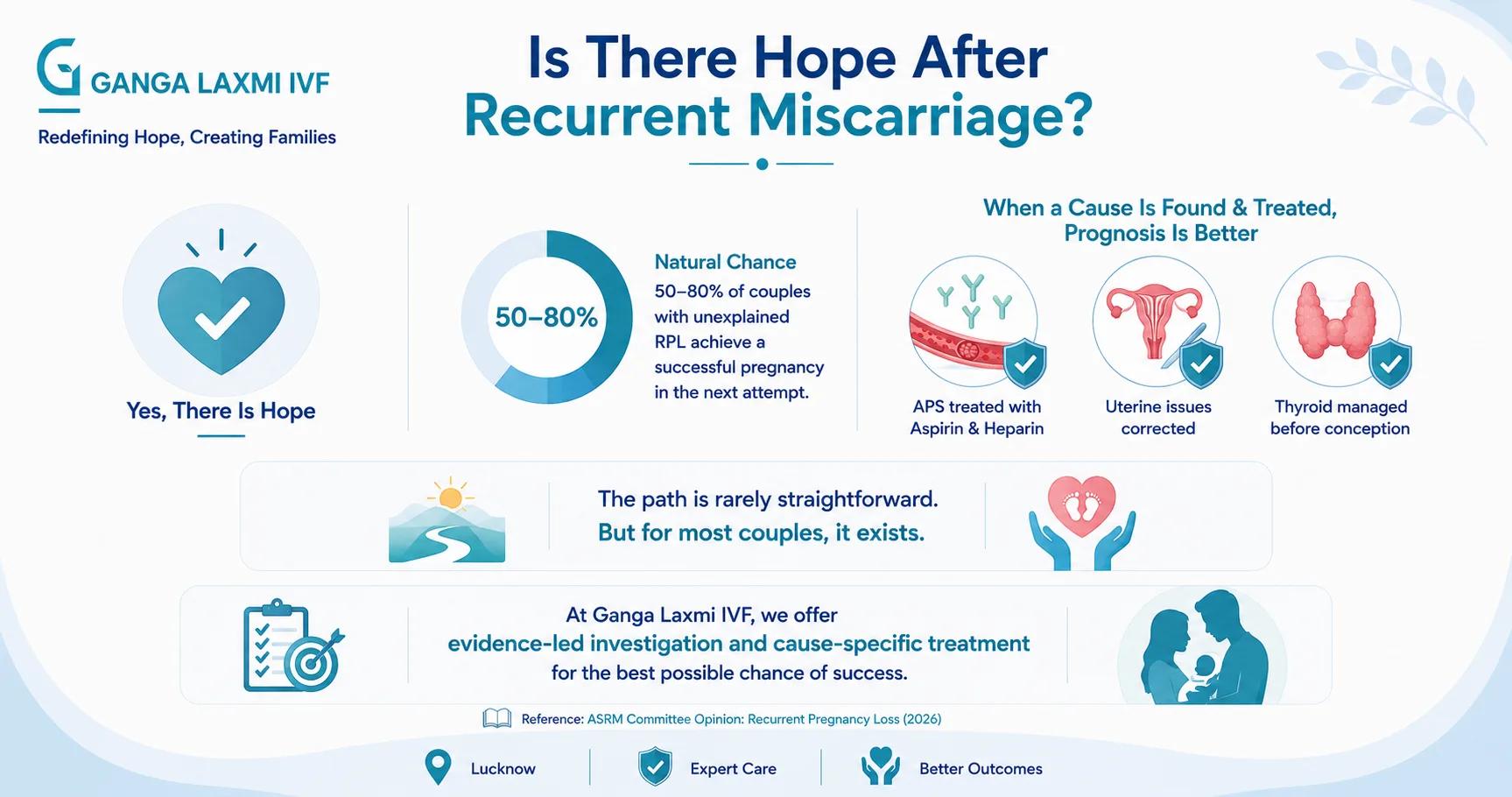
The ASRM 2026 guidance includes an important natural history finding: 50 to 80 percent of patients with unexplained RPL will go on to have a successful pregnancy in a subsequent attempt, even without specific intervention. This is not a reason to skip investigation or decline treatment where a cause is identified — it is context that matters when weighing options and setting expectations.
For couples where a specific cause is identified and treated, the prognosis is generally better still: APS treated with aspirin and heparin, uterine abnormalities corrected with hysteroscopic surgery, and thyroid dysfunction managed before the next conception attempt all carry meaningful evidence of benefit.
The path is rarely straightforward. But for most couples, it exists.
What Dr. Kumudini Chauhan offers is not a guarantee. She offers a thorough, evidence-led investigation that gives you the best possible chance of understanding why this has been happening, and a treatment plan calibrated to what she finds — not a generic protocol applied to every patient regardless of their individual picture.
Reference: ASRM Committee Opinion: Recurrent Pregnancy Loss (2026)
Frequently Asked Questions About Recurrent Miscarriage
Two or more pregnancy losses warrant specialist investigation — they do not need to be consecutive. You do not need to wait for a third. The 2026 ASRM guidance recommends evaluation after two losses, recognising that waiting longer causes unnecessary emotional and physical harm. Dr. Kumudini Chauhan at Ganga Laxmi IVF recommends consulting after two losses, not three. If you have experienced two losses, booking an investigation now is the right step.
Commonly considered blood tests include antiphospholipid antibodies (ACA and lupus anticoagulant) and thyroid function testing (TSH), with fasting blood glucose or HbA1c where metabolic risk factors are present. Other parts of the evaluation are not blood tests — they include uterine cavity assessment, miscarriage-tissue chromosome testing where tissue is available, and parental karyotyping in selected cases. Sperm DNA fragmentation, prolactin, or endometrial biopsy testing are considered only where the individual clinical picture supports them. Inherited thrombophilia screening and broad immune panels are not included as routine tests, in line with 2026 ASRM guidance.
In many cases, a clear cause is identified through investigation. In others, investigations return within normal limits — this is known as unexplained recurrent pregnancy loss. This is genuinely frustrating, and Dr. Chauhan will acknowledge that honestly. But a normal investigation result does not mean treatment cannot help. For unexplained recurrent miscarriage, IVF with PGT testing and supportive care in early pregnancy have improved outcomes significantly even without a confirmed single cause.
Yes. The 2026 ASRM guidance reports that 50 to 80 percent of patients with unexplained recurrent pregnancy loss go on to have a successful pregnancy in a subsequent attempt, even without specific intervention. Where a cause is identified and treated — such as APS managed with aspirin and heparin, or a uterine abnormality corrected with hysteroscopic surgery — outcomes are generally better still. Dr. Kumudini Chauhan will give you an honest assessment of your individual prognosis based on your specific results, age, and history.
PCOS is associated with factors that may increase pregnancy complications, including insulin resistance, elevated LH, and metabolic abnormalities that can affect egg quality and the early uterine environment. However, PCOS should not be assumed to be the direct cause of recurrent loss without a thorough individual assessment. In patients with both PCOS and recurrent pregnancy loss, the clinical focus is on the individual's specific hormonal and metabolic profile. Metformin may be considered where insulin resistance is confirmed, and thyroid function is always optimised.
IVF by itself does not prevent miscarriage. IVF with preimplantation genetic testing (PGT-A) can test each embryo's chromosomes before transfer and select chromosomally normal embryos, which may reduce the risk of miscarriage from chromosomal causes. However, the 2026 ASRM guidance notes that PGT-A has not been shown to significantly reduce miscarriage rates or improve live birth rates compared with expectant management in unselected RPL patients. It may be discussed in selected patients — those with advanced maternal age, a pattern of aneuploid losses, or a partner's chromosomal translocation — using shared decision-making that includes a full discussion of costs, limitations, and alternatives.
Yes. High sperm DNA fragmentation, which may not show up on a standard semen analysis, has been associated with early pregnancy loss and recurrent miscarriage. When a semen analysis appears normal but losses continue, a sperm DNA fragmentation test for the male partner is an important next step. Dr. Kumudini Chauhan recommends this test in appropriate cases as part of the systematic investigation of both partners.
Treatment depends entirely on the cause identified. Antiphospholipid syndrome is treated with aspirin and low-molecular-weight heparin in early pregnancy. Uterine structural issues are corrected with hysteroscopic surgery, performed as a day-care procedure at Ganga Laxmi IVF. Thyroid dysfunction is treated with medication before the next conception attempt. For unexplained recurrent miscarriage, IVF with PGT-A may be considered in selected patients following shared decision-making. Dr. Kumudini Chauhan does not prescribe a generic protocol. The diagnosis comes first, and the treatment follows from it.
The right specialist is here
Recurrent Miscarriage Specialist in Lucknow
If you have experienced two or more miscarriages and want a structured, thorough investigation rather than generic reassurance, Dr. Kumudini Chauhan at Ganga Laxmi IVF offers exactly that. She will review your history, order the right panel of investigations for both partners, and give you a clear, cause-specific treatment plan.
You do not need to travel to Delhi for this level of specialist care. Dr. Kumudini Chauhan trained at Sir Ganga Ram Hospital, New Delhi and CNCI, Kolkata. She founded Ganga Laxmi IVF in Gomtinagar, Lucknow in 2014, specifically to bring that level of clinical expertise to couples across Uttar Pradesh.
Women come to Ganga Laxmi IVF from across Lucknow — including Indira Nagar, Aliganj, Hazratganj, and Jankipuram — and from Kanpur, Barabanki, Sitapur, Rae Bareli, Ayodhya, Sultanpur, Unnao, Hardoi, Bahraich, and Lakhimpur, for recurrent miscarriage investigation and treatment.
About the author
Dr. Kumudini Chauhan

Dr. Kumudini Chauhan
Recurrent Pregnancy Loss & IVF
Dr. Chauhan is a senior gynaecologist and infertility specialist in Gomti Nagar, Lucknow with over 20 years of experience. She is dedicated to providing honest, evidence-based guidance to couples navigating fertility challenges.
Keep reading
Related articles

IUI Cost in Lucknow: What You Actually Pay (2026 Guide by Dr. Kumudini Chauhan)
IUI in Lucknow costs Rs 8,000 to Rs 18,000 per cycle. Dr. Kumudini Chauhan explains every component, what affects your total, and how it compares to IVF.

IVF Cost in Lucknow 2026: Full Transparent Breakdown by Dr. Kumudini Chauhan
IVF cost in Lucknow starts from Rs 1,10,000 per cycle at Ganga Laxmi IVF. Dr. Kumudini Chauhan explains every charge, what is included, and how to plan.
How to Increase AMH Levels: A Complete, Doctor Reviewed Guide
Can AMH levels really be increased? Learn what actually works, which foods and supplements may help, what science says, and when IVF is recommended. Doctor reviewed by fertility specialists at Ganga Laxmi IVF, Lucknow.
Blocked Fallopian Tube Treatment in Lucknow: Causes, HSG Test, IVF & Pregnancy Options
Blocked fallopian tubes are a leading cause of female infertility. Dr. Kumudini Chauhan explains causes, HSG testing and IVF options in Lucknow.